






Piaget's 4 Stages of Cognitive Development Explained
Explore Jean Piaget's stages of child development, from sensorimotor to formal operational, including key concepts like schemas and assimilation.
Piaget’s Theory of Cognitive Development
From Reflexes to Reasoning: How We Learn to Think
Who Was Jean Piaget?
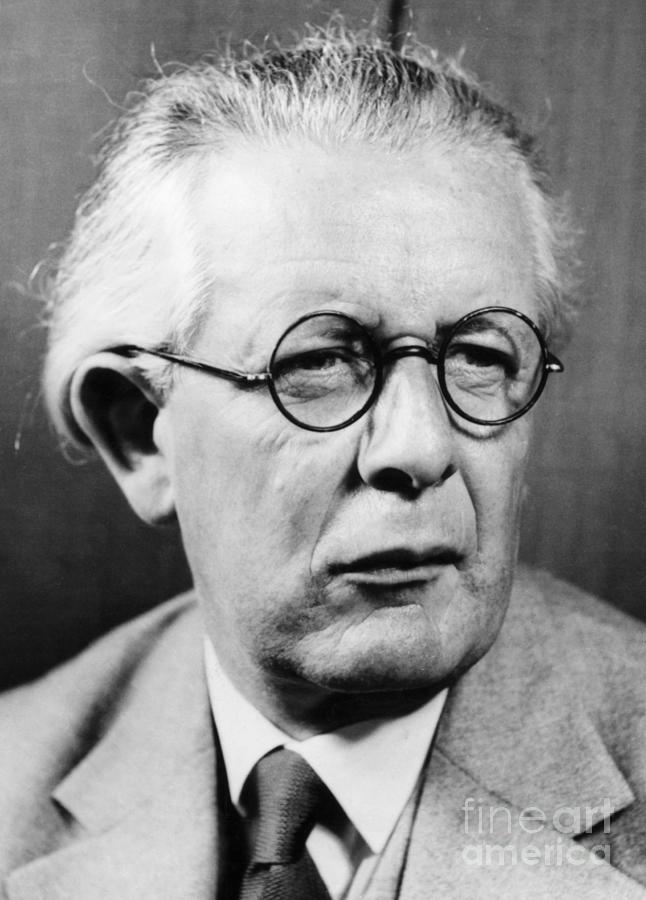
Jean Piaget (1896–1980) was a Swiss psychologist who realized that children think differently than adults. Before his theory, children were often just considered 'miniature adults' with less knowledge. Piaget proved that children construct a mental model of the world through specific developmental stages.
Core Concept: Schemas
Schemas are mental 'building blocks' or filing cabinets used to organize knowledge. When a child learns something new, they try to fit it into an existing folder (schema).
Example: A child has a schema for 'dog' (4 legs, furry, barks). If they see a cat, they might initially call it a result of their 'dog' schema.
Assimilation vs. Accommodation
Assimilation
Fitting new information into existing schemas. Scenario: Seeing a zebra and calling it a 'horse'.
Accommodation
Changing existing schemas to incorporate new information. Scenario: Learning that zebras are striped and distinct, creating a new 'zebra' category.
Roadmap: The 4 Stages of Development
1. Sensorimotor (0-2 Years)
2. Preoperational (2-7 Years)
3. Concrete Operational (7-11 Years)
4. Formal Operational (12+ Years)
Stage 1: Sensorimotor (0–2 Years)
Learning through Five Senses: Infants explore the world by touching, tasting, and hearing.
Object Permanence: Around 8 months, babies realize things continue to exist even when unseen.
Stage 2: Preoperational (2–7 Years)
Symbolic Thinking: Using words and images to represent objects (make-believe play).
Egocentrism: Difficulty seeing things from another person's perspective.
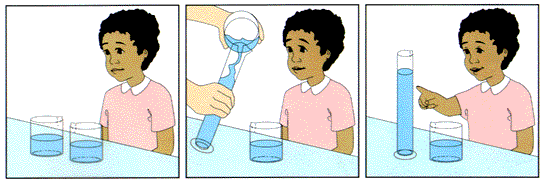
Lack of Conservation: Understanding that quantity stays the same despite changes in shape.
Stage 3: Concrete Operational (7–11 Years)
• Logical Thought: Can reason logically about concrete events. • Conservation Mastered: Understanding that pouring water into a tall glass doesn't change the amount. • Math logic: 4+2 = 6, and 6-2 = 4 (Reversibility).
Stage 4: Formal Operational (12+ Years)
This is the stage you are likely in now! Thinking becomes abstract rather than just concrete.
• Abstract Logic: Thinking about justice, freedom, love. • Hypothetical Reasoning: 'What if' scenarios. • Strategy: Planning ahead (like moves in Chess or career planning).
Connecting Literature: 'The Childhood'
"When did my childhood go? Was it the day I ceased to be eleven, Was it the time I realized that Hell and Heaven, Could not be found in Geography..." — Markus Natten
Piaget Connection: The poet describes the shift from Concrete Operational (believing what is seen/taught in geography books) to Formal Operational (understanding abstract concepts like Hell/Heaven that don't exist physically).
Key Takeaways
1. Development happens in universal stages. 2. We build understanding through Schemas (Assimilation & Accommodation). 3. Thinking evolves from simple reflexes to complex logic. 4. Just like in 'Childhood', growing up means seeing the world abstractly, not just as it appears.
- psychology
- child-development
- piaget-theory
- cognitive-science
- education
- developmental-stages