





Game-Based Learning in Software Project Management Review
Explore how the Software Project Management Game balances enjoyment and learning effective PM strategies through simulation and game mechanics.
Balancing Enjoyment and Learning in Teaching Software Project Management
A Review of Game-Based Learning Effectiveness
Wang, Alf Inge, Vegard Aas Knutsen, and Eivind Askestad (2024)
By: Tal Levi | Teacher: Nimrod
The Core Problem & Solution
Project management education often lacks practical experience, leading to real-world project failures. Students need to learn from mistakes without financial risk.
The 'Software Project Management Game' utilizes mechanics from popular titles like 'Game Dev Tycoon' and 'The Sims'. It engages players through five progressively harder projects, teaching people skills and task management.
Bridging Theory and Practice
Traditional teaching methods are often too theoretical, leaving students unprepared for the pressures of decision-making and teamwork.
The simulation allows active management of tasks, employees, time, and stress.
Result: Learning through experience rather than rote memorization.
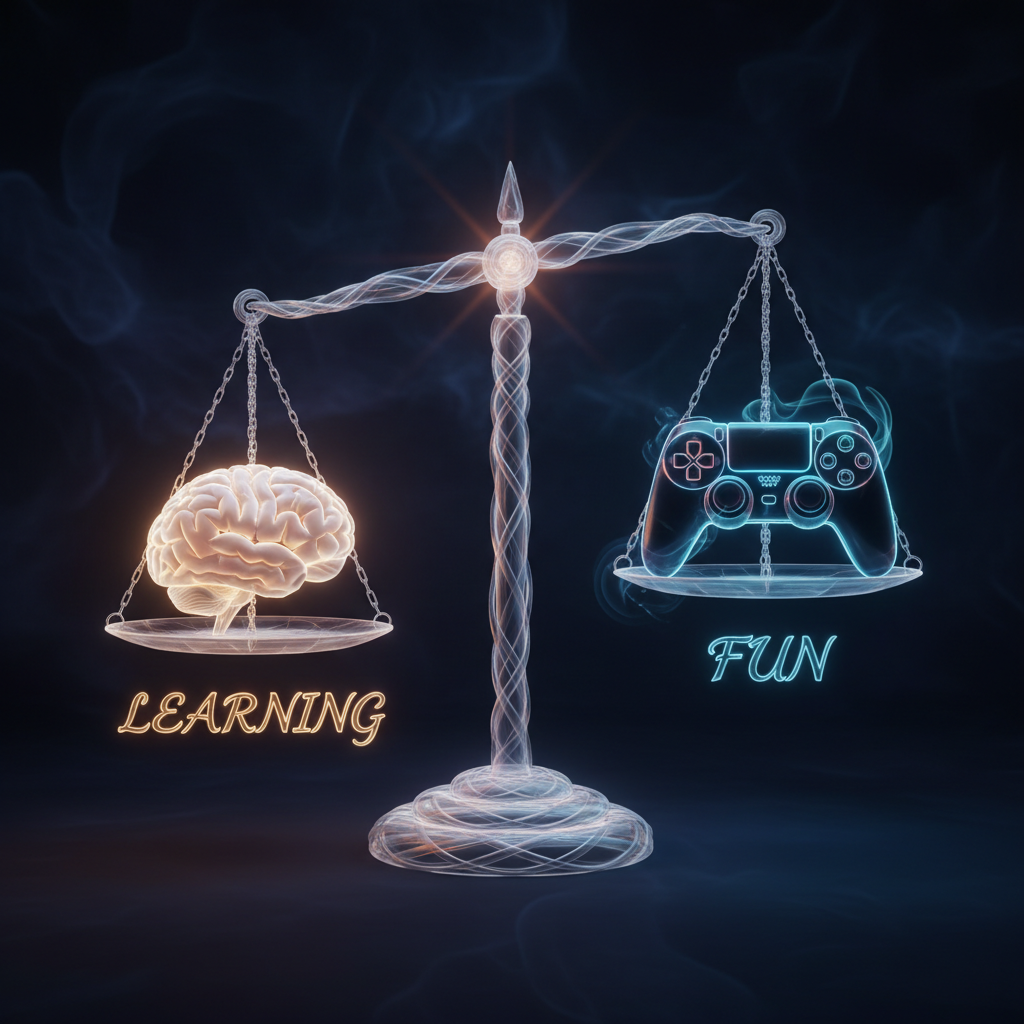
How does the Software Project Management Game balance player enjoyment with learning?
RQ1: Effect on Game Flow (Enjoyment)
RQ2: Effect on Essential Motivation
RQ3: Effect on Perceived Learning
RQ4: Acquisition of PM Strategies
RQ5: Overall Balance of Fun & Learning
Research Methods
18 Software Engineering Students managing 5 progressively difficult virtual projects.
Questionnaires, Observations, and Interviews.
Mixed Methods: Qualitative (Behavior/Feedback) & Quantitative (Structured Data).
Experimental Procedure
Zero Training
Students started without prior instructions, relying on intuition.
Active Gameplay
Managing stress, skills, and deadlines in a simulated environment.
Evaluation
Structured questionnaires assessing SUS, Flow, and Motivation.
Key Findings & Results
High Engagement: Participants reported immersion and concentration.
Perceived Learning: >50% confirmed learning SP management skills.
Autonomy: Strong sense of control over project decisions.
Conclusions
The Software Project Management Game successfully balances enjoyment and learning.
Participants experienced high engagement and intrinsic motivation.
Real project management strategies were effectively applied during gameplay.
Game-based learning proves to be an effective approach for software engineering education.
Critique & Thoughts
Engaging 'Learn by Doing' approach; Feels like real development.
Sample size (18 students) is too small for definitive generalization.
Real-world projects are team-based. Adding a Multiplayer Mode would significantly enhance realism.
Vocabulary
• Game-Based Learning: Educational approach using games.<br>• Software Project Management: Planning/managing software projects.<br>• Player Engagement: Level of involvement/focus.<br>• Gameflow: Deep involvement/smooth experience.<br>• Essential Motivation: Internal interest/enjoyment.<br>• Perceived Learning: Self-assessment of knowledge.<br>• Decision-Making Process: Choosing actions.
• Simulation Environment: Models real-world situations.<br>• Task Allocation: Assigning tasks.<br>• Human Resource Management: Managing people/skills.<br>• Cognitive Engagement: Mental effort during learning.<br>• Time Constraints: Deadlines.<br>• Stress Management: Handling workload pressure.<br>• Learning Outcomes: Skills gained.
• Educational Effectiveness: Ability to support learning.<br>• Project Management Strategies: Methods for effective management.<br>• User-Centered Evaluation: Focus on user experience.<br>• Qualitative Analysis: Observations/Feedback.<br>• Quantitative Analysis: Numerical data.<br>• Software Engineering Education: Academic training.
- game-based-learning
- software-project-management
- education-technology
- project-simulation
- case-study
- software-engineering