


Top Benefits of Calisthenics: A Science-Backed Guide
Discover why calisthenics is effective for BMI reduction, functional strength, and mobility. Compare bodyweight training vs. weights for better results.
The Science of Bodyweight: Why Choose Calisthenics?
Data-backed benefits for functional strength, mobility, and body composition.
The 4 Pillars of Calisthenics
Body Composition
Highest probability for BMI reduction among exercise types.
Functional Strength
Compound movements that mimic real-world patterns.
Mobility & Balance
Enhances flexibility and coordination simultaneously.
Accessibility
Zero equipment required, low cost, high ROI.
Effectiveness for BMI Reduction
According to meta-analysis research, calisthenics has the highest probability of being the most effective intervention for reducing body mass index compared to resistance training alone.
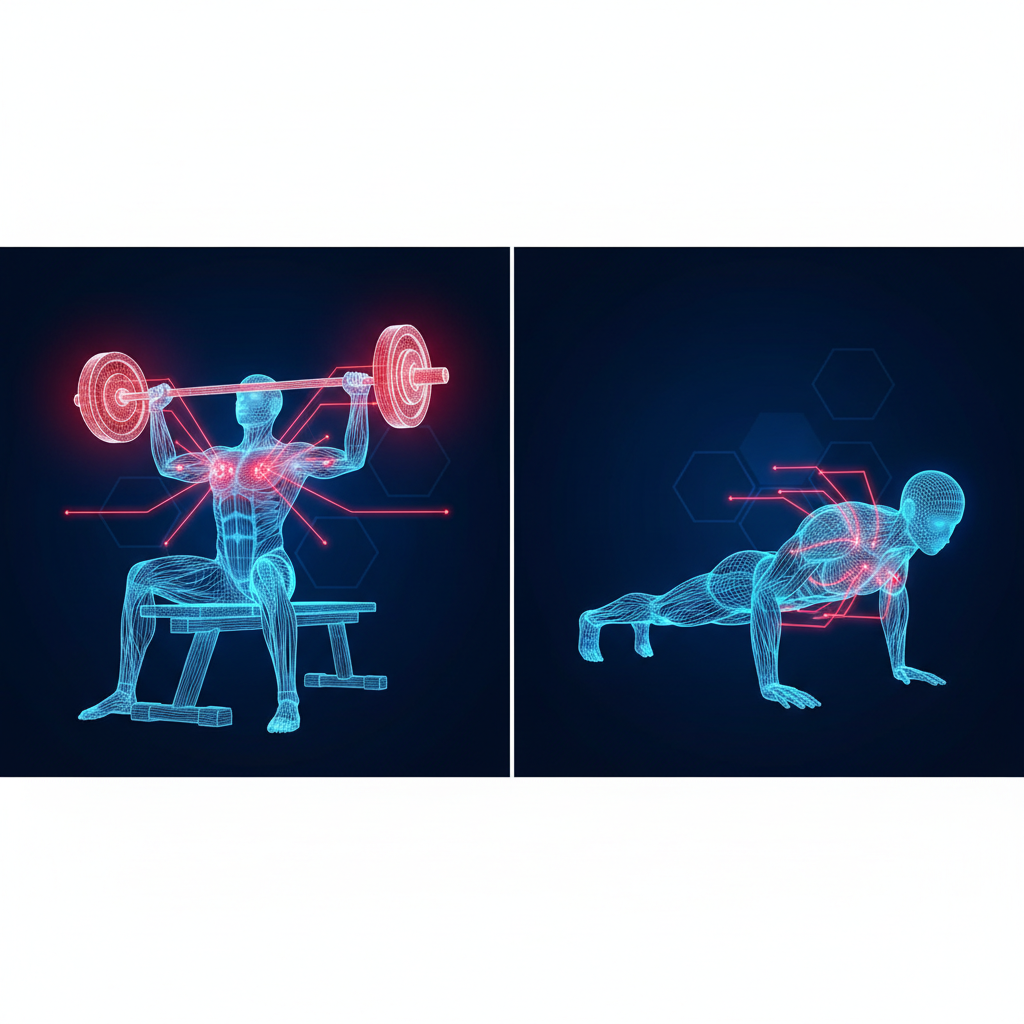
Strength: Calisthenics vs. Bench Press
Comparable 1RM Gains
Research indicates progressive push-up training improves 1-rep max bench press strength just as effectively as bench press training itself.
Hypertrophy for Beginners
For beginners and intermediates, bodyweight training yields similar muscle growth rates without the need for heavy iron.
Calorie Expenditure Efficiency
Calisthenics utilizes compound exercises (engaging multiple muscle groups), leading to higher calorie burn per minute.
To achieve optimal body composition, ~1,200 METs-min/week is required via calisthenics.
Functional Movement & Balance
Unlike isolation machines, calisthenics demands total body coordination.
Proprioception
Develops awareness of body position in space.
Joint Integrity
Strengthens tendons and ligaments through natural load angles.
The Financial Edge: 1 Year Cost Analysis
Zero Equipment = Zero Barrier to Entry
Calisthenics vs. Weight Training
Cost
Free
$$$ (Gym/Equipment)
Mechanism
Compound / Kinetic Chain
Isolation / Targeted
Primary Goal
Functional Control
Max Strength / Size
Safety
Low Joint Stress
Higher Loading Stress
Safety Profile & Injury Prevention
Calisthenics is generally lower-risk than heavy lifting because it doesn't rely on external loads that can maximize spinal compression. However, "overuse" is the main risk factor. Correct form is critical.
Tip: Focus on progression (e.g., knee pushups → standard pushups) to protect joints.
Start Your Journey
Master your bodyweight. Build logic, strength, and freedom.
Consistency > Intensity
- calisthenics
- bodyweight-training
- fitness-for-beginners
- strength-training
- mobility
- health-data
- workout-benefits