






Impact of Social Class on Health and Education Outcomes
Explore how social class, cultural capital, and the theories of Bourdieu, Beck, and Stiglitz influence health disparities and educational achievement.
Social Class as a Cultural Phenomenon
Impacts on Health & Educational Outcomes: A Critical Analysis of Bourdieu, Beck, and Stiglitz
Defining the Cultural Phenomenon
Social class is not merely an economic bracket; it is a lived, cultural reality. It is embedded within social groups through shared dispositions, tastes, and knowledge. This presentation explores how class is transmitted intergenerationally and acts as a determinant for life chances.
Class as 'Perceived' and 'Lived': Beyond income to behavior and lifestyle.
Embeddedness: Rooted in family socialization and neighborhood institutions.
Transmission: Passed down via 'Symbolic Inheritance' rather than just wealth.
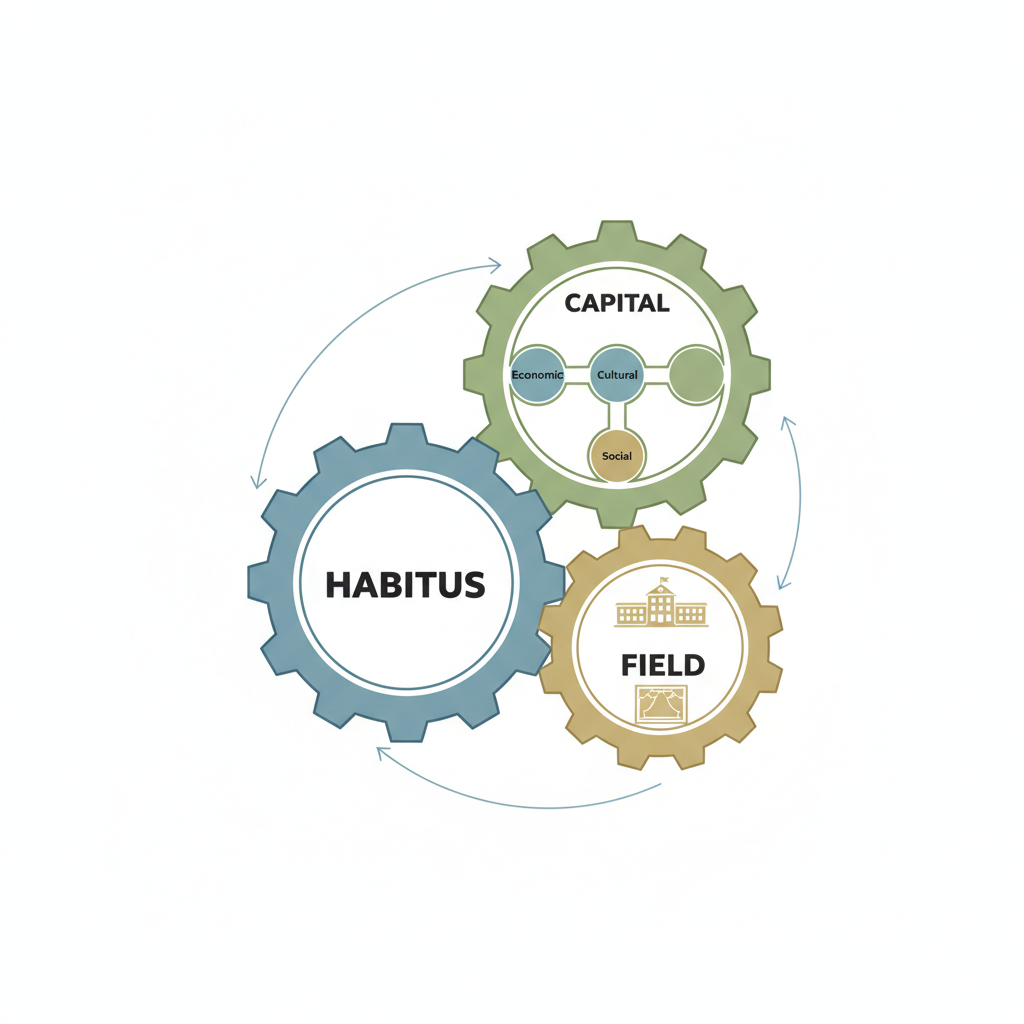
Bourdieu: Habitus and Cultural Capital
Habitus: The Embodied History
Deeply ingrained habits, skills, and dispositions possessed due to life experiences. It functions as a 'feel for the game' in social situations.
Cultural Capital (3 Forms)
1. Embodied (Accent, mannerisms)<br>2. Objectified (Books, instruments)<br>3. Institutionalized (Degrees, credentials)
Education: Symbolic Violence & Reproduction
Educational institutions are not neutral. They valorize the cultural capital of the dominant class (language, behavior, reference points). Working-class 'habitus' is often devalued or treated as a deficit.
Symbolic Violence: The imposition of a 'legitimate' culture that makes the failure of lower classes seem like a personal lack of talent rather than structural exclusion.
Hidden Curriculum: Unspoken rules of behavior (e.g., how to speak to authority) that middle-class students inherit from family.
Data: Impact of Parental Education on Student Performance
This chart illustrates the strong correlation between parents' level of education (a proxy for institutionalized cultural capital) and students' PISA science scores, demonstrating intergenerational transmission of advantage.
Ulrich Beck: The Risk Society
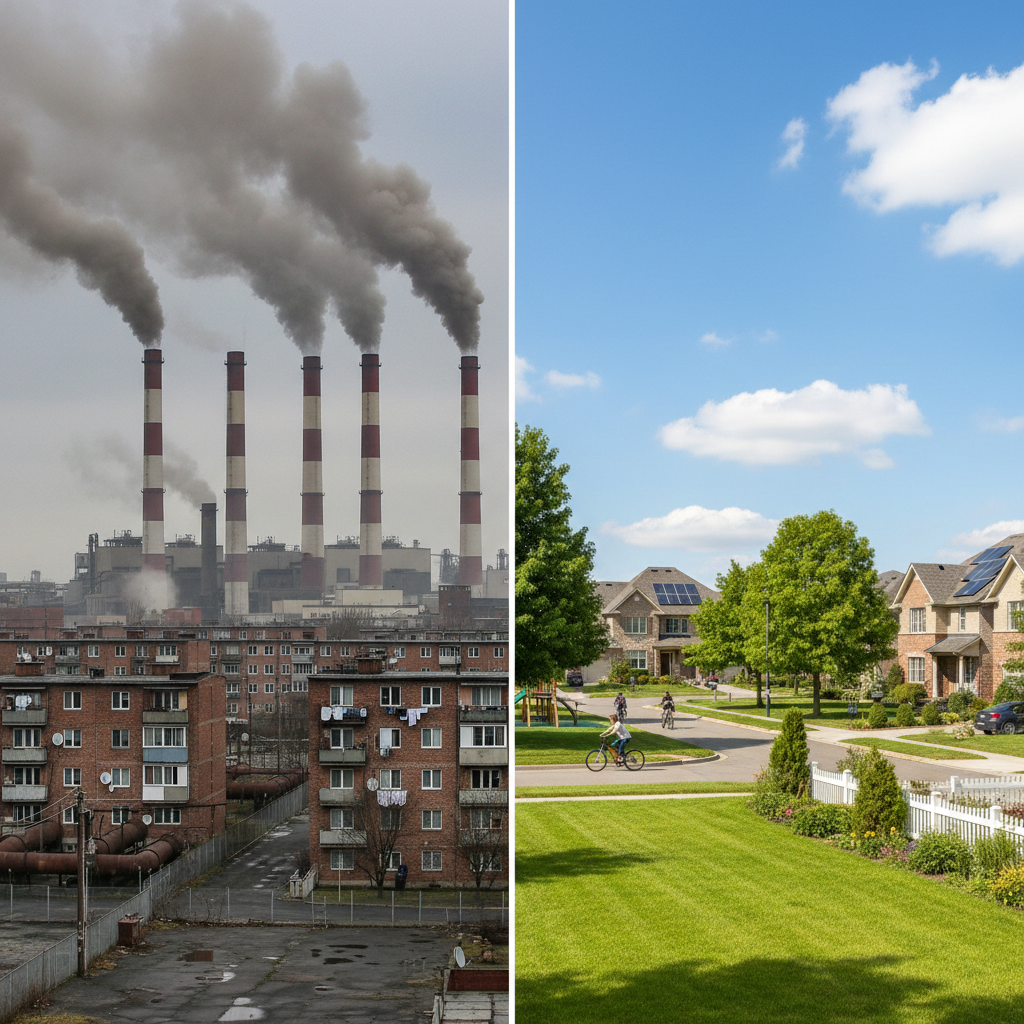
Beck argues we live in a 'Risk Society' where modernization produces new hazards. While risks are often global, the ability to avoid them is strictly stratified by class.
"Smog is democratic, but poison is not." — Beck highlights that while some risks are universal, the working class is disproportionately exposed to environmental hazards, poor housing, and industrial accidents.
Cultural Health Capital (CHC)
Converging Bourdieu and Beck: Health risks are effectively managed via 'Cultural Health Capital'—the skills and resources needed to navigate the healthcare system.
Micro-Interactions: Middle-class patients interact with doctors as 'equals,' asking questions and advocating for better care.
Lifestyle as Competence: Health behaviors (yoga, kale, screenings) become status symbols that signal moral worth.
Outcome: Lower classes may experience alienation in clinical settings, leading to late diagnoses.
The Social Gradient in Health
Following the principles of the Marmot Review, this data illustrates that health outcomes improve incrementally as you move up the socio-economic scale. It is not just about poverty, but relative inequality.
Stiglitz: Inequality as a Structural Barrier
"Inequality of opportunity is a vicious cycle. If you are born poor, you have a high probability of remaining poor."
Joseph Stiglitz critiques the economic structures that prevent equal access to the 'market' of health and education. Economic inequality blocks the transmission of talent. High costs of university or quality healthcare create a Pay-to-Play system that overrides merit.
Critical Evaluation: Strengths & Weaknesses
Strengths of the Approach
• Shifts focus from individual 'blame' to structural/cultural reproduction.<br>• Explains why inequality persists despite free access policies.<br>• Interlinks economic capital with social behaviors.
Limitations & Critiques
• Can be overly deterministic (Bourdieu's 'Habitus' leaves little room for agency).<br>• Risks framing working-class culture purely as a 'deficit' rather than a different value system.<br>• Beck's 'democratic risk' may underestimate how well the rich can insulate themselves.
Conclusion & Implications
Health and education outcomes are not merely biological or intellectual results; they are cultural artifacts shaped by social class. Through the lens of Bourdieu, Beck, and Stiglitz, we see that inequality is reproduced through hidden mechanisms of capital and risk.
Implication for Practice: Interventions must move beyond financial aid to address cultural inclusion and structural barriers in institutions.
- sociology
- cultural-capital
- bourdieu
- social-inequality
- education-policy
- public-health
- social-class