
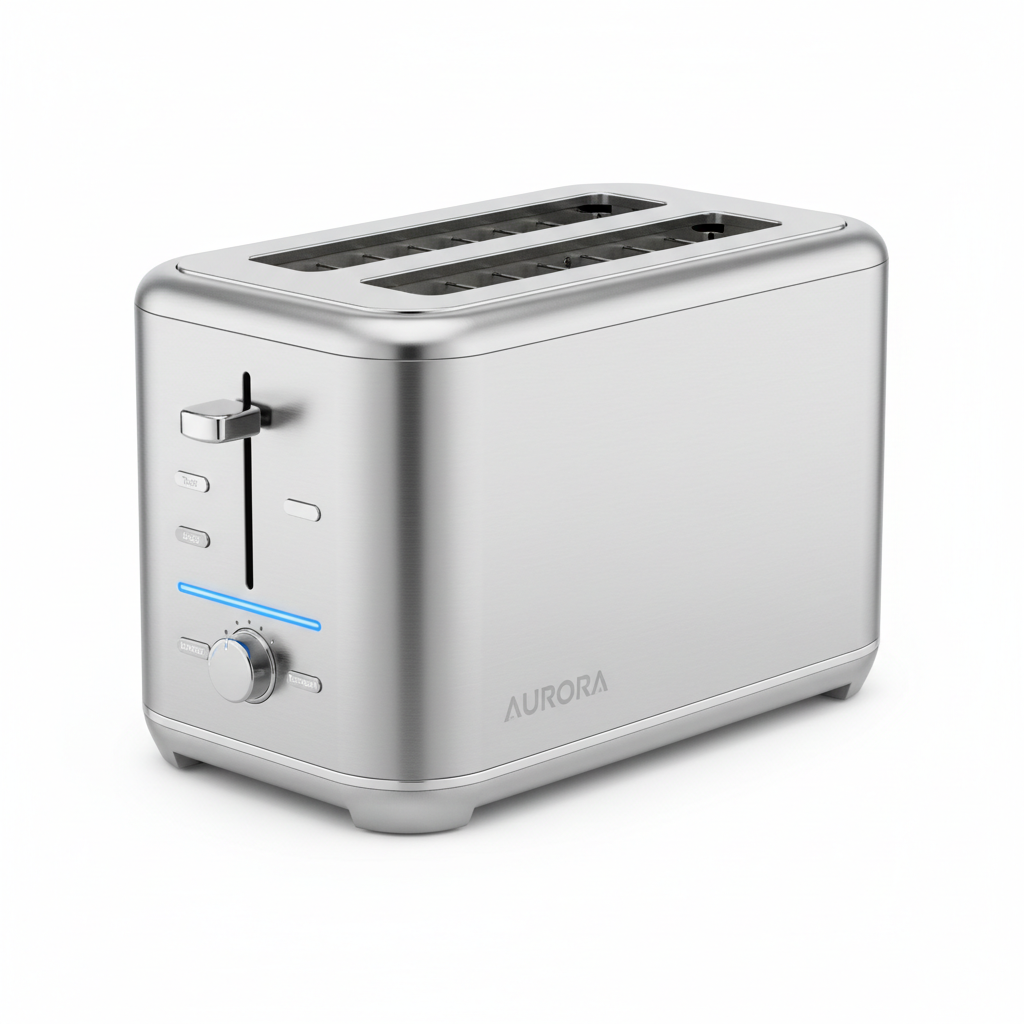


Circular Business Model for Sustainable Toasters
Explore a circular economy strategy for durable toasters, featuring modular design, repair programs, and a 95% material recovery recycling system.
Circular Business Model for Toasters
Transitioning from Disposable to Durable | Assignment 2
Loan Nguyen & An Nguyen (Toaster Group)
Key Findings from LCA: The Eco-Cost Challenge
Life Cycle Assessment (LCA) reveals that material extraction dominates the environmental impact. The heating element alone accounts for the majority of the eco-cost, making component recovery essential.
Summary: The Circular Business Model
We propose a Classic Long-Life Model combined with Product Service Sytem (PSS) elements. By doubling the price, we triple the lifespan and fund a closed-loop system.
<h2>Linear Model (Current)</h2><p><strong>Price:</strong> EUR 45</p><p><strong>Lifespan:</strong> 2-3 Years</p><p><strong>Repairability:</strong> Low/None</p><p><strong>End-of-Life:</strong> Waste</p>
<h2>Circular Model (Proposed)</h2><p><strong>Price:</strong> EUR 90</p><p><strong>Lifespan:</strong> 5-7 Years</p><p><strong>Repairability:</strong> Modular Design</p><p><strong>End-of-Life:</strong> 95% Material Recovery</p>
Value Proposition Canvas
<h4>Customer Pains</h4><ul><li>Frequent breakdowns</li><li>High eco-cost guilt</li><li>Difficult disposal</li></ul>
<h4>Customer Gains</h4><ul><li>Long-lasting product</li><li>Sustainable design</li><li>Cost savings over time</li></ul>
<h4>Our Solution</h4><ul><li>Modular Design</li><li>Repair Service Program</li><li>Disposal Fee Return</li></ul>
Revenue Model Breakdown
The business model diversifies income beyond initial sales. Service contracts and disposal fees create resilience and fund the reverse logistics infrastructure.
Product Returns & Grading System
The core operational engine is the 4-Grade System. All returns are assessed within 48 hours to maximize value retention, prioritizing refurbishment over recycling.
<table style='width:100%; border-collapse: collapse; margin-top: 20px;'><thead><tr style='background:#334155; color:white;'><th style='padding:15px;'>Grade</th><th style='padding:15px;'>Condition</th><th style='padding:15px;'>Action</th><th style='padding:15px;'>Destination</th></tr></thead><tbody><tr style='background:#f1f5f9; border-bottom: 2px solid white;'><td style='padding:15px; font-weight:bold;'>A (Like New)</td><td style='padding:15px;'>Visible Cosmetic Wear</td><td style='padding:15px;'>Clean & Repack</td><td style='padding:15px;'>Resell @ 90% Price</td></tr><tr style='background:#e2e8f0; border-bottom: 2px solid white;'><td style='padding:15px; font-weight:bold;'>B (Minor Wear)</td><td style='padding:15px;'>Scratches/Dents</td><td style='padding:15px;'>Replace Housing</td><td style='padding:15px;'>Resell @ 70% Price</td></tr><tr style='background:#cbd5e1; border-bottom: 2px solid white;'><td style='padding:15px; font-weight:bold;'>C (Major Damage)</td><td style='padding:15px;'>Component Failure</td><td style='padding:15px;'>Harvest Parts</td><td style='padding:15px;'>Recycle Remainder</td></tr><tr style='background:#94a3b8; color:white;'><td style='padding:15px; font-weight:bold;'>D (End of Life)</td><td style='padding:15px;'>Unrepairable</td><td style='padding:15px;'>Disassemble</td><td style='padding:15px;'>Material Recovery (95%)</td></tr></tbody></table>
Expected Returns Distribution
90%
of returned units are successfully Refurbished or Resold (Grades A-C), minimizing waste generation.
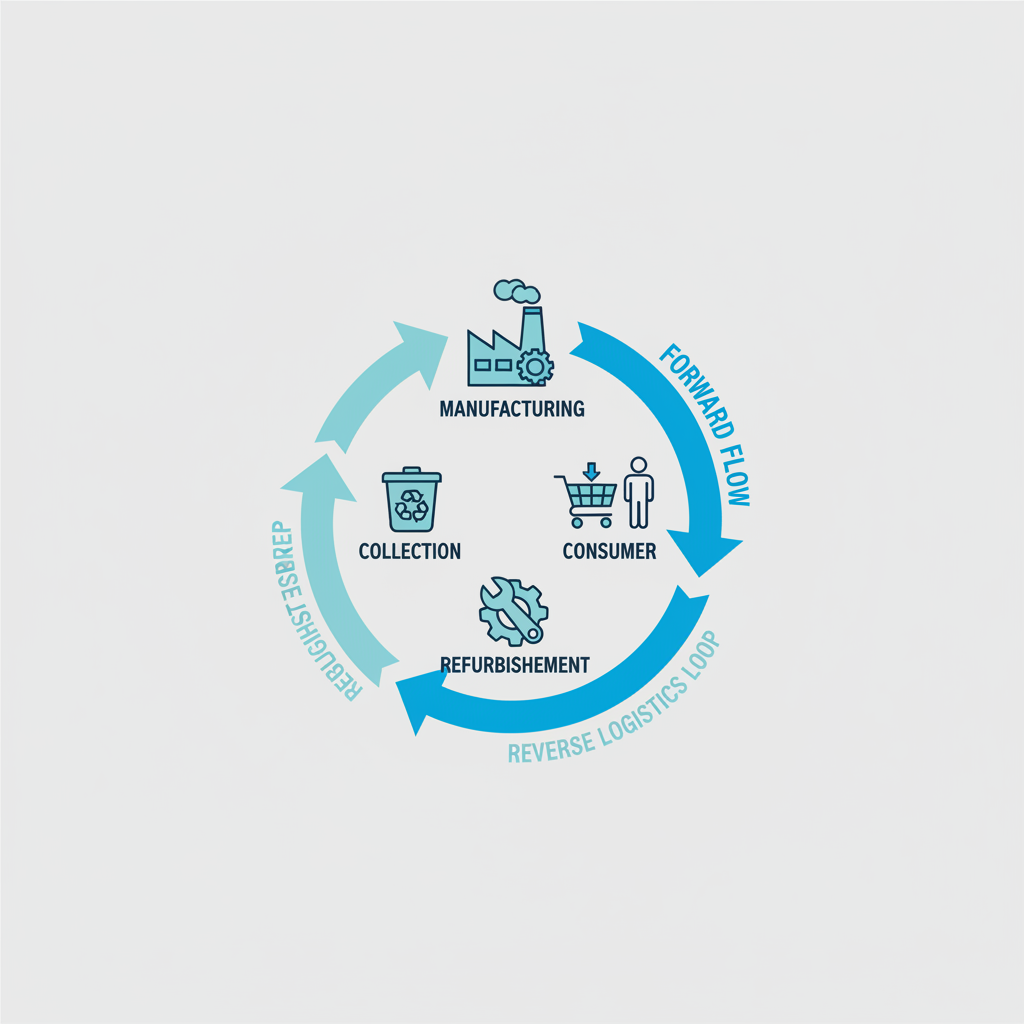
Circular Supply Chain Strategy
<ul><li><strong>Forward Flow:</strong> Manufacturing (Malaysia) → Distribution (Rotterdam) → Retail</li><li><strong>Reverse Flow:</strong> Consumer → Drop-off Points → Consolidation Centers → Refurbishment</li><li><strong>Key Partners:</strong> Reverse Logistics Providers, Material Recyclers, Retail Channels</li></ul>
Circular Performance Targets (KPIs)
Achieving these targets results in a 20-30% reduction in environmental costs while maintaining profitability.
Conclusion: The Price of Circularity
Premium pricing is not just profit—it is the funding mechanism for circularity.
By charging EUR 90 upfront, we deliver a 5-7 year lifespan, fund a comprehensive take-back system, and recover 95% of critical materials. This creates value for the customer, the business, and the environment.
- circular-economy
- sustainable-design
- business-model
- product-lifecycle
- green-logistics
- repairability
- sustainability