







Made byBobr AI

Climate Change and Health: Causal Economic Evidence

Discover how climate change causally impacts mortality, mental health, and infant development through the lens of top-tier health economics research.

#climate-change#health-economics#public-health#mortality-rates#mental-health#causal-inference#policy-research
Watch
Pitch

Climate Change and Health: Evidence from Causal Economic Studies

Emran Mollah
Master Seminar: Health Economics (WS 2025/2026)
University of Duisburg-Essen
Supervisor: Diem Hoang Xuan
Made byBobr AI

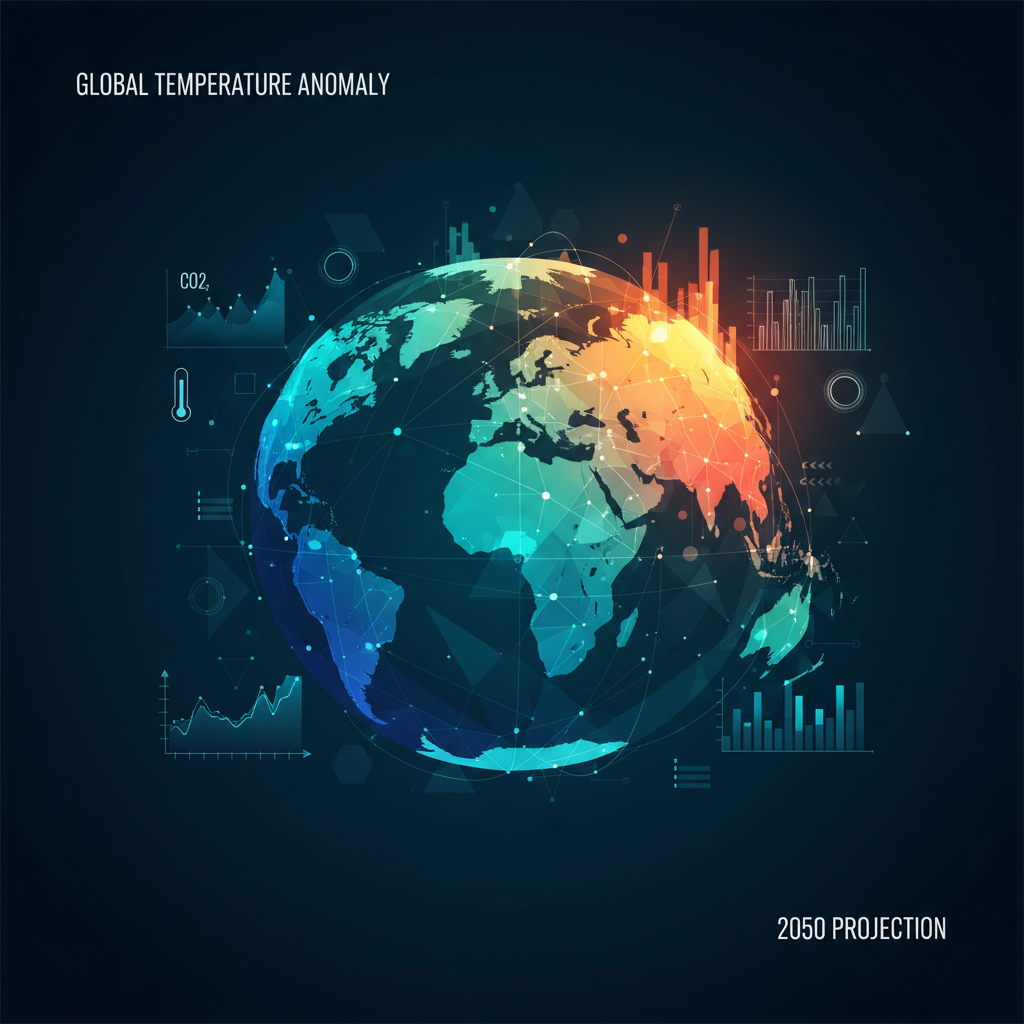
Motivation: A Public Health Crisis

  • Climate change is an escalating public health concern characterized by rising temperatures and extreme weather events.
  • Key health domains impacted: Mortality, Mental Health, Infant & Child Health.
  • While correlations are observed, rigorous causal evidence is essential for effective policy design.
Made byBobr AI

Research Objectives

Areas of Focus

• Temperature & Mortality
• Mental Health Outcomes
• Early-life Health Effects

Methodological Emphasis

• Identification Strategies
• Causal Mechanisms
• Adaptation & Institutions

Made byBobr AI

Contribution of the Paper

Synthesizes evidence from causally identified economic studies.
Global coverage includes:
High-income: USA, Sweden
Middle-income: Mexico, China
Low-income: Uganda, Kyrgyz Republic
Identifies critical gaps in long-term and intergenerational effect research.
Made byBobr AI

Methodology

Narrative Literature Review focusing on top-tier economic journals:

• American Economic Journal
• Journal of Health Economics
• Review of Economics and Statistics

Inclusion Criteria:
Studies employing Fixed-effects models, Quasi-experimental designs, or Historical natural experiments.
Made byBobr AI

Measuring Climate Exposure

Economic studies utilize short-run weather variation as exogenous shocks, defined relative to local historical norms.

Daily/Seasonal Temp: Extreme heat (>85–90°F) & Cold (<25–30°F)
Precipitation: Rainfall shocks, droughts, floods

(Deschênes & Greenstone, 2011; Heutel et al., 2021)
Made byBobr AI

Identification Challenges

Climate exposure is not randomly assigned. Analysis without causal design carries the risk of biased estimates.

Socioeconomic
Confounding
Healthcare
Access
Selective
Migration
Made byBobr AI

Identification Strategies

01
Location & Time Fixed Effects
Using individual or household panel data to control for unobserved heterogeneity.
02
Policy Discontinuities
Example: Coal heating policy in China (Fan et al., 2020).
03
Historical Cohort Comparisons
Example: 2,000 years of Chinese elites (Lee & Li, 2021).
Made byBobr AI

Temperature and Mortality

Evidence suggests extreme heat increases mortality non-linearly. Effects are concentrated at very high temperatures. (Deschênes & Greenstone, 2011)

Chart
Made byBobr AI

Adaptation and Institutional Capacity

Regional Variation
Historically warmer regions exhibit lower heat mortality, suggesting acclimatization and behavioral adjustments.
(Heutel et al., 2021)
Healthcare Systems
Stronger public health infrastructure significantly reduces mortality risks from climate shocks.
(Cohen & Dechezleprêtre, 2022)
Made byBobr AI

Mental Health Effects

Mental health is a major but often overlooked channel. Higher temperatures are causally linked to worsened psychiatric outcomes.

Chart
Made byBobr AI

Infant, Child, and Fetal Health

Early-life exposure is particularly harmful

Rainfall Shocks
Increase infant mortality (Nyqvist et al., 2025)
Droughts & Floods
Increase child stunting by 4–7% (Freudenreich et al., 2022)
Extreme Temperatures
Increase fetal mortality (Hajdu & Hajdu, 2023)
Made byBobr AI

Indirect Channels: Air Pollution

Climate affects health indirectly via pollution. Fan et al. (2020) found coal heating significantly raises PM levels and mortality. Temperature inversions also spike respiratory illness (Jans et al., 2018).
Chart
Made byBobr AI

Policy Implications

  • Invest in Healthcare Infrastructure
  • Strengthen Adaptive Capacity
  • Protect Vulnerable Populations
Made byBobr AI

Conclusion & Future Research

Climate change causally affects mortality, mental health, and early-life outcomes. Institutional capacity mitigates these impacts, but adaptation alone is insufficient.

Research Needs:
• Long-term Effects
• Intergenerational Impacts
• Low-income Settings
Made byBobr AI
Bobr AI

DESIGNER-MADE
PRESENTATION,
GENERATED FROM
YOUR PROMPT

Create your own professional slide deck with real images, data charts, and unique design in under a minute.

Generate For Free

Climate Change and Health: Causal Economic Evidence

Discover how climate change causally impacts mortality, mental health, and infant development through the lens of top-tier health economics research.

Climate Change and Health: Evidence from Causal Economic Studies

Emran Mollah<br>Master Seminar: Health Economics (WS 2025/2026)<br>University of Duisburg-Essen<br>Supervisor: Diem Hoang Xuan

Motivation: A Public Health Crisis

Climate change is an escalating public health concern characterized by rising temperatures and extreme weather events.

Key health domains impacted: Mortality, Mental Health, Infant & Child Health.

While correlations are observed, rigorous causal evidence is essential for effective policy design.

Research Objectives

Areas of Focus

• Temperature & Mortality<br>• Mental Health Outcomes<br>• Early-life Health Effects

Methodological Emphasis

• Identification Strategies<br>• Causal Mechanisms<br>• Adaptation & Institutions

Contribution of the Paper

Synthesizes evidence from causally identified economic studies.

Global coverage includes:<br><b>High-income:</b> USA, Sweden<br><b>Middle-income:</b> Mexico, China<br><b>Low-income:</b> Uganda, Kyrgyz Republic

Identifies critical gaps in long-term and intergenerational effect research.

Methodology

<b>Narrative Literature Review</b> focusing on top-tier economic journals:<br><br>• American Economic Journal<br>• Journal of Health Economics<br>• Review of Economics and Statistics<br><br><b>Inclusion Criteria:</b><br>Studies employing Fixed-effects models, Quasi-experimental designs, or Historical natural experiments.

Measuring Climate Exposure

Economic studies utilize short-run weather variation as exogenous shocks, defined relative to local historical norms.

• <b>Daily/Seasonal Temp:</b> Extreme heat (>85–90°F) & Cold (<25–30°F)<br>• <b>Precipitation:</b> Rainfall shocks, droughts, floods<br><br><i>(Deschênes & Greenstone, 2011; Heutel et al., 2021)</i>

Identification Challenges

Climate exposure is not randomly assigned. Analysis without causal design carries the risk of biased estimates.

• Socioeconomic Confounding<br>• Differences in Healthcare Access<br>• Selective Migration

Identification Strategies

<b>Location & Time Fixed Effects</b><br>Using individual or household panel data to control for unobserved heterogeneity.

<b>Policy Discontinuities</b><br>Example: Coal heating policy in China (Fan et al., 2020).

<b>Historical Cohort Comparisons</b><br>Example: 2,000 years of Chinese elites (Lee & Li, 2021).

Temperature and Mortality

Evidence suggests extreme heat increases mortality non-linearly. Effects are concentrated at very high temperatures. (Deschênes & Greenstone, 2011)

Adaptation and Institutional Capacity

<b>Regional Variation</b><br>Historically warmer regions exhibit lower heat mortality, suggesting acclimatization and behavioral adjustments.<br>(Heutel et al., 2021)

<b>Healthcare Systems</b><br>Stronger public health infrastructure significantly reduces mortality risks from climate shocks.<br>(Cohen & Dechezleprêtre, 2022)

Mental Health Effects

Mental health is a major but often overlooked channel. Higher temperatures are causally linked to worsened psychiatric outcomes.

Infant, Child, and Fetal Health

Early-life exposure is particularly harmful

<b>Rainfall Shocks</b><br>Increase infant mortality (Nyqvist et al., 2025)

<b>Droughts & Floods</b><br>Increase child stunting by 4–7% (Freudenreich et al., 2022)

<b>Extreme Temperatures</b><br>Increase fetal mortality (Hajdu & Hajdu, 2023)

Indirect Channels: Air Pollution

Climate affects health indirectly via pollution. Fan et al. (2020) found coal heating significantly raises PM levels and mortality. Temperature inversions also spike respiratory illness (Jans et al., 2018).

Policy Implications

Invest in Healthcare Infrastructure

Strengthen Adaptive Capacity

Protect Vulnerable Populations

Conclusion & Future Research

Climate change causally affects mortality, mental health, and early-life outcomes. Institutional capacity mitigates these impacts, but adaptation alone is insufficient.

<b>Research Needs:</b><br>• Long-term Effects<br>• Intergenerational Impacts<br>• Low-income Settings

  • climate-change
  • health-economics
  • public-health
  • mortality-rates
  • mental-health
  • causal-inference
  • policy-research