

Ethics and Materiality in Teresa Margolles & Santiago Sierra
Explore how contemporary artists Teresa Margolles and Santiago Sierra use materiality and human labor to critique social violence and economic exploitation.
WHEN DEATH BECOMES MATERIAL
Corporeality, Ethics, and the Limits of Representation
Case Studies: Teresa Margolles & Santiago Sierra
Contextual Primer: The Social Body in Crisis
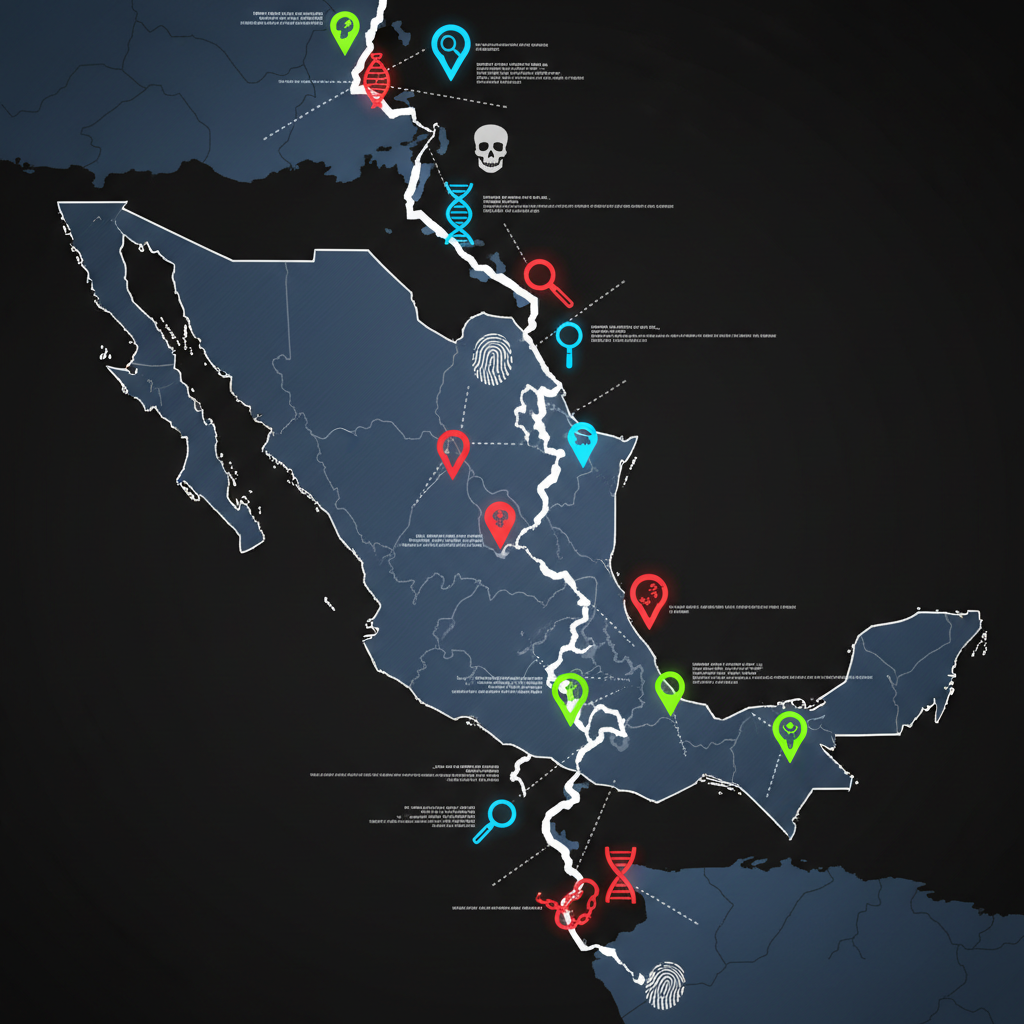
1990s-2000s Mexico :: The post-NAFTA era ushered in rapid industrialization along the border (maquiladoras) alongside an escalation of cartel-related violence. :: In this landscape, the human body often became a byproduct—discarded, anonymous, and commodified. :: The 'morgue' functions not just as a medical facility, but as a social thermometer (Medina, 2004), measuring the temperature of systemic violence.
"What happens in a city morgue is what happens outside."
— Teresa Margolles (2006)
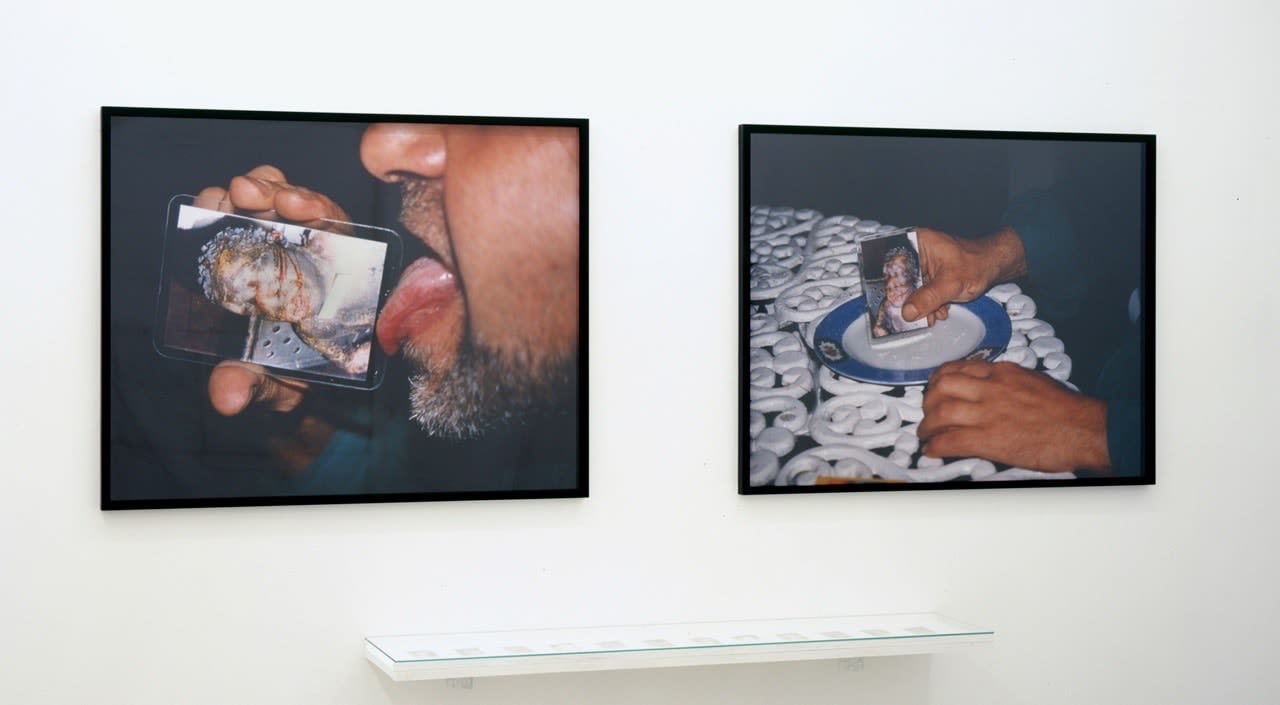
Tarjetas para picar cocaína (Cards to Cut Cocaine), 1997–1999
Medium: Laminated cards with photographs of victims of drug violence. :: Action: Distributed at art galleries and parties for use by consumers. :: Critique: Margolles forces a direct material connection between the consumption of pleasure (cocaine) and the production of death (narco-violence). The user is forced to physically handle the image of the victim to consume the product that caused their death.
Ref: Banwell, J. 'Morgue and Corpse Art'. Cards depicted corpses of anonymous victims murdered in drug-related conflicts.
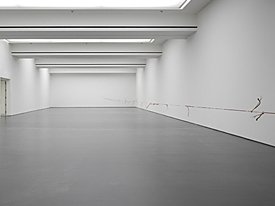
127 cuerpos (127 Bodies), 2006
Medium: Remnants of thread used in autopsies, knotted together. :: Installation: A single continuous line suspended across the exhibition space. :: Materiality: These threads have passed through human skin post-mortem. Stained with blood and bodily fluids, they act as 'metonyms' for the absent bodies (Banwell, 2015). The work balances Minimalist aesthetic purity with Abject forensic reality.
Exhibited: Kunsthalle Düsseldorf. 127 pieces of autopsy thread representing specific unidentified bodies.
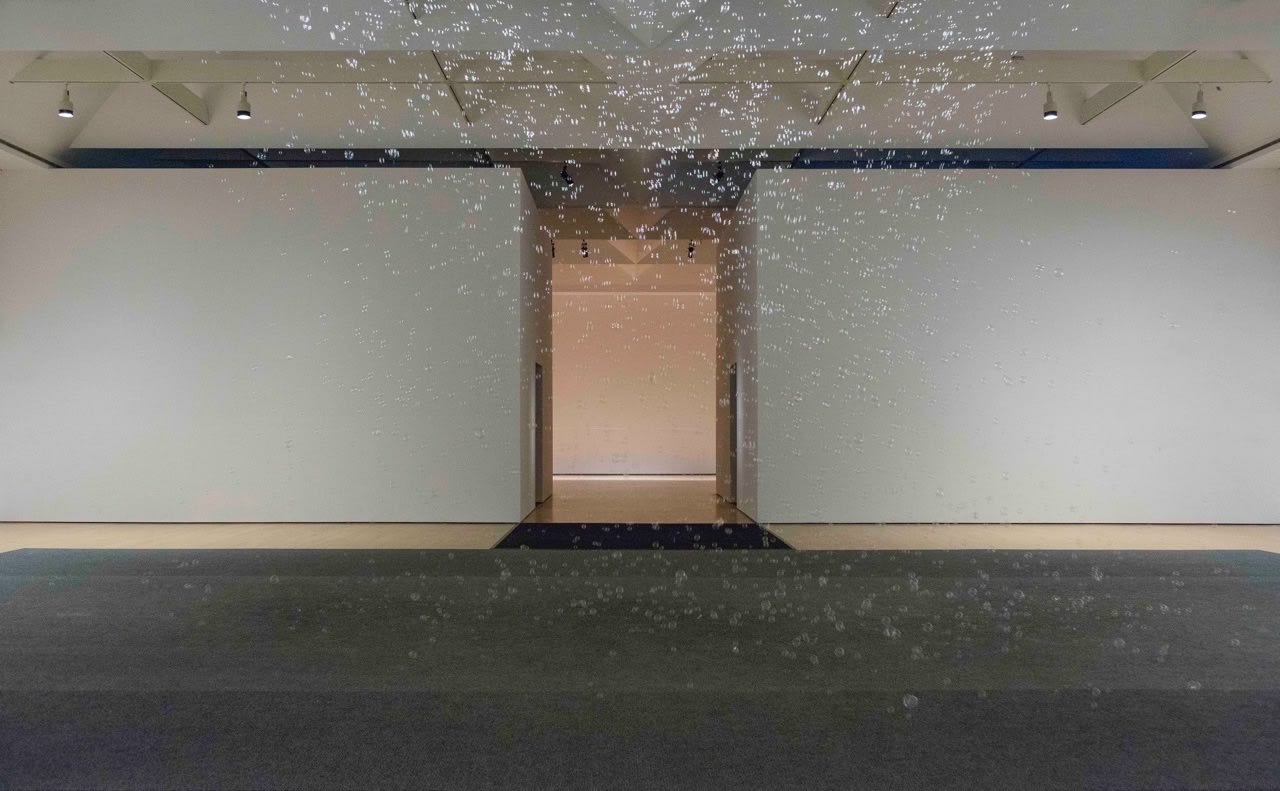
En el aire (In the Air), 2003
Medium: Bubbles made from water used to wash corpses in the morgue. :: Phenomenological Effect: Viewers delight in the playful, ethereal visual of bubbles, only to realize upon popping that the substance touching their skin is the residue of death. :: Ethics: It dissolves the boundary between the living viewer and the anonymous dead. The institution (museum) becomes a space of contamination.
Note: Similar concept used in 'Vaporización' (2001), where morgue water was vaporized into fog.
Santiago Sierra: Remunerated Acts
Shift in Focus :: From the forensic reality of the body (Margolles) to the economic reality of the body (Sierra). :: Mechanism :: Sierra pays marginalized individuals minimal sums to perform useless, degrading, or enduring tasks. :: Thesis :: The work exposes the 'violence of the wage' and the complicity of the art market in global exploitation.
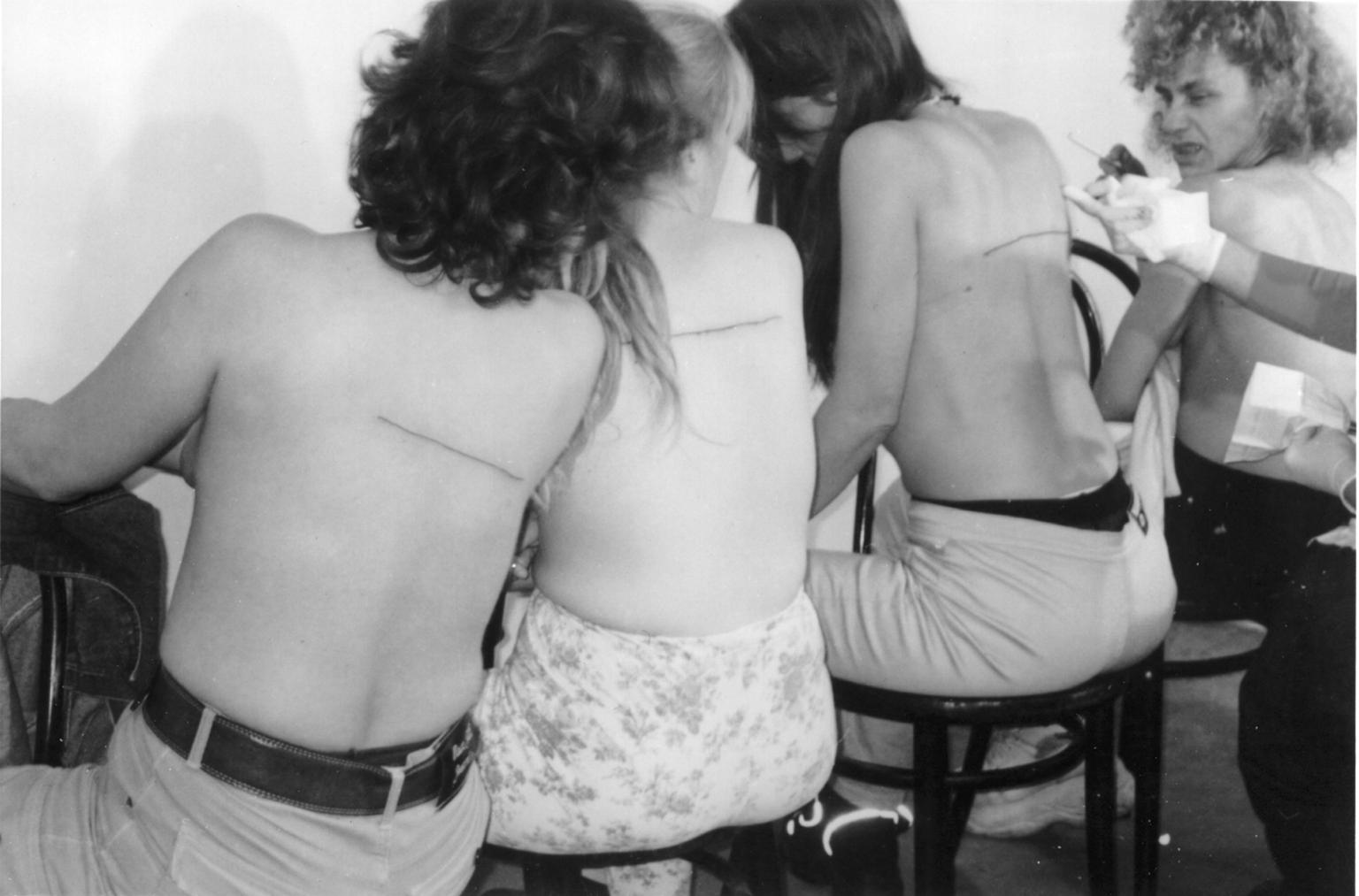
160 cm Line Tattooed on 4 People, 2000
Action: Four prostitutes addicted to heroin were hired for the price of a shot of heroin to have a continuous line tattooed across their backs. :: Documentation: Presented as stark, black-and-white documentation. :: Critique: The permanence of the mark (art object) contrasts with the transience of the payment (survival). It literalizes the reduction of the human subject to canvas/commodity.
Location: El Gallo Arte Contemporáneo, Salamanca, Spain. The line visually connects distinct individuals into a single commodity.
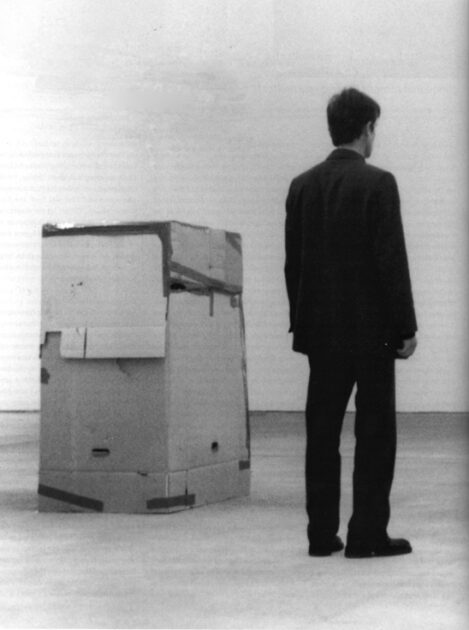
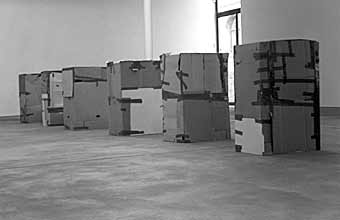
Person Paid to Remain Inside a Cardboard Box, 2000
Action: Workers were paid to sit hidden inside a crudely constructed cardboard box in the gallery for 4 hours a day. :: Visuals: The viewer sees only the box, not the labor. :: Concept: A critique of the 'invisibility' of labor in the global economy. The human presence is felt but deliberately obscured, highlighting how comfort relies on hidden suffering.
Exhibited: Kunst-Werke Berlin. The title acts as the contract, stating exactly the terms of the exchange.
Workers Who Cannot Be Paid, Remunerated to Remain in the Gallery, 2000
Context: Utilized Chechnyan refugees seeking asylum who were legally barred from working. :: Action: Sierra paid them 'under the table' to act as living sculptures, simply standing or sitting. :: Paradox: By paying them, he made them commit a crime (working illegally). The work traps the subjects in a legal/economic double bind for the gallery's gaze.
Exhibited: Kunst-Werke Berlin. Documentation typically shows faces obscured or turned away to protect their identity.
Ethical Limits of Representation
Aestheticization of Suffering:
Does bringing the morgue or the exploited worker into the 'White Cube' neutralize the violence, turning it into a consumable commodity for the elite?
Re-victimization vs. Confrontation:
Critics argue Sierra exploits his subjects. Supporters argue he merely reveals the exploitation that already exists. Margolles is accused of desecration, yet she argues the bodies are already desecrated by state negligence.
Conclusion: When Death Becomes Material
• Margolles and Sierra reject metaphor in favor of indexicality (real traces, real bodies).::• They force the art institution to acknowledge its entanglement with global violence and capital.::• The viewer is no longer a passive observer but an implicated participant (breathing the vapor, holding the card, witnessing the paid labor).
- contemporary-art
- art-criticism
- teresa-margolles
- santiago-sierra
- forensic-art
- institutional-critique
- ethics-in-art