


Webcam Engineering: Optics, ISP & Miniaturization Analysis
Explore the technical constraints of webcam design, including CMOS sensor architecture, ISP pipelines, USB bandwidth bottlenecks, and optical stacks.
Webcam Engineering: Optics, Silicon & Scale
An analysis of miniaturization, image signal processing pipelines, and data transport constraints.
CS/EE Technical Seminar
The Miniaturization Challenge
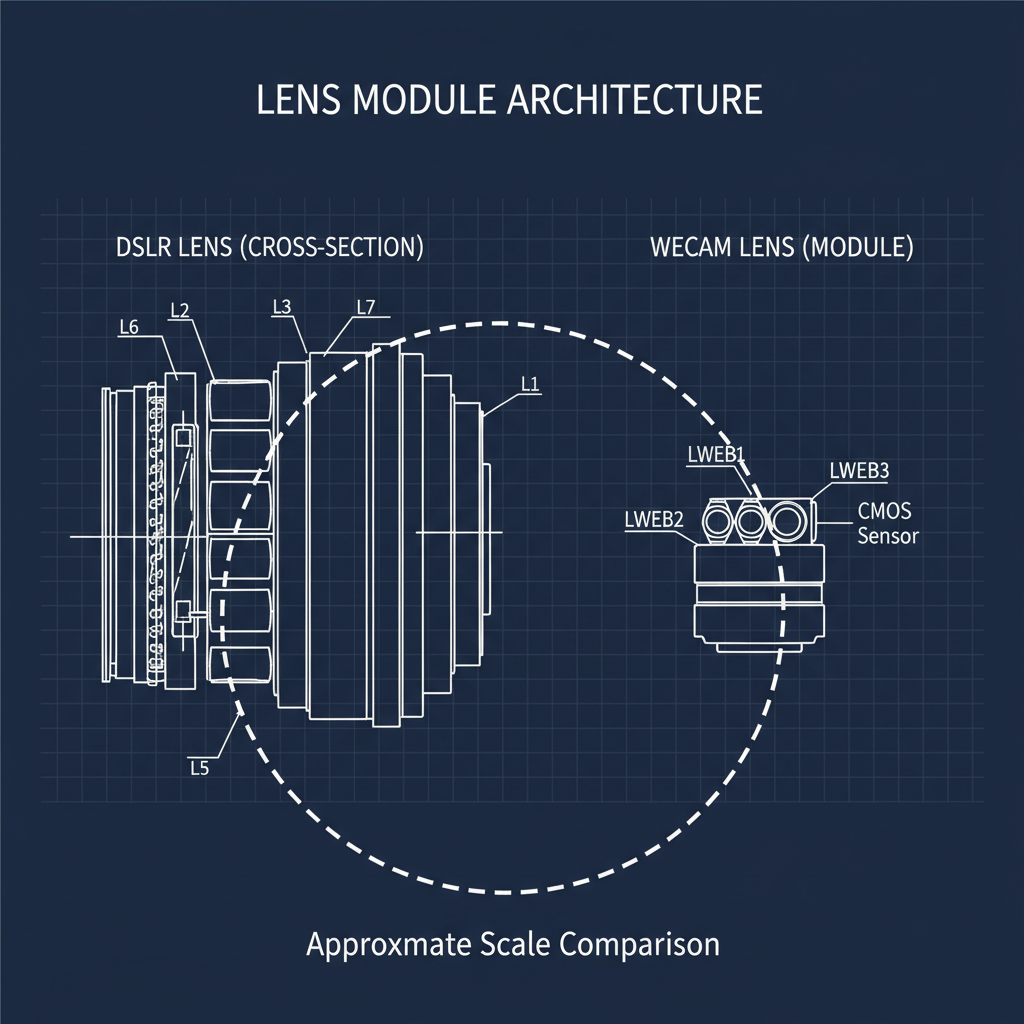
Physical Constraints: Typical module depth < 5mm (laptop bezel limit).
Micro-Optics: Transition from glass elements to molded plastic aspheres.
Thermal: Dissipating sensor heat (up to 1-2W for 4K) without active cooling.
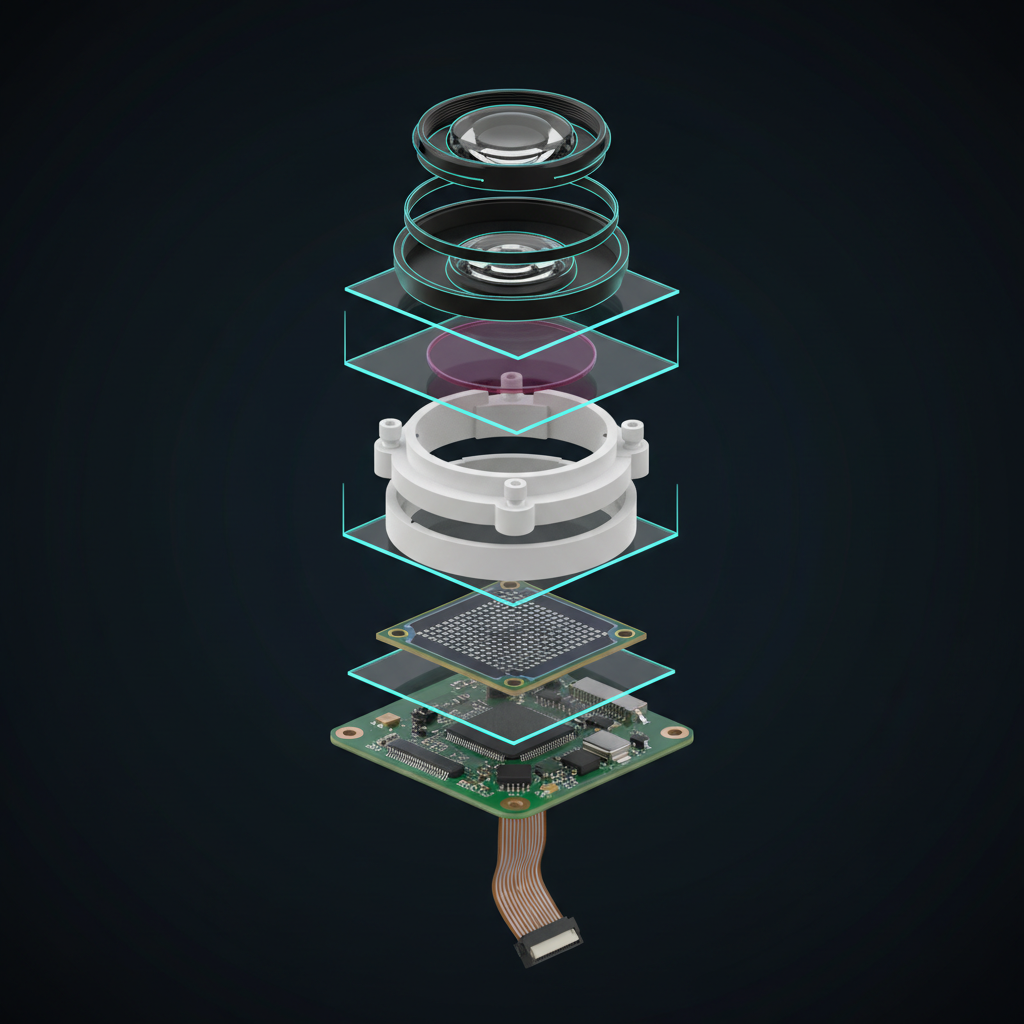
Anatomy of the Optical Stack
To fit z-height requirements, the stack is vertically integrated directly onto the PCB.
Lens Barrel (3-5 Plastic Elements)
IR Cut Filter (650nm Block)
CMOS Image Sensor (BGA Mounted)
Sensor Technology: CMOS Architecture
Webcams utilize Back-Illuminated (BSI) CMOS sensors to maximize photon efficiency in small areas.
Rolling Shutter: Rows are read sequentially, causing 'jello' effect in fast motion.
Pixel Pitch: Typically 1.1µm - 1.4µm. Smaller pixels = higher resolution but lower SNR (Signal to Noise Ratio).
The ISP Pipeline: Raw to RGB
The Image Signal Processor (ISP) is the 'brain' that corrects the physical flaws of small sensors.
1. Black Level Reading
2. Lens Shading Correction
3. Demosaicing (Bayer -> RGB)
4. 3A Control (Auto-Exposure, Auto-White Balance, Auto-Focus)
The Bandwidth Bottleneck
Raw video data exceeds USB 2.0 capacity, necessitating on-chip compression (MJPEG/H.264) before transmission.
CRITICAL: USB Video Class (UVC) protocol handles the negotiation of these formats.
Focus Mechanics: Fixed vs. VCM
Fixed Focus (Hyperfocal)
Lens glued at a specific distance. Relies on small aperture (f/2.8+) and small sensor to maintain deep Depth of Field (DoF). Sharp from 40cm to infinity.
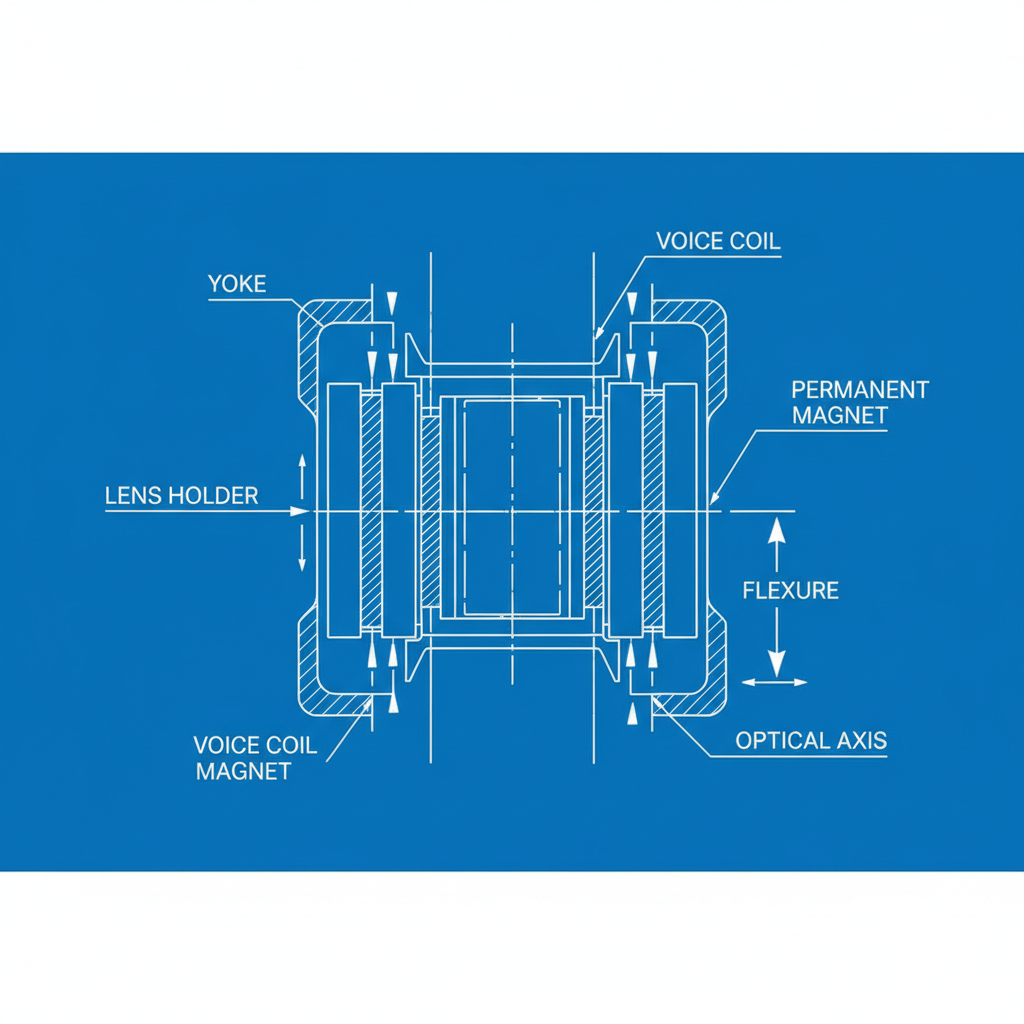
Voice Coil Motor (VCM) AF
Lens barrel floats in magnetic field suspended by springs. Current applied to coil moves lens forward/back by micrometers. Required for larger sensors (shallower DoF).
Optimization Matrix: Choosing the Hardware
Hardware selection depends on the specific balance of mobility, bandwidth, and lighting.
Travel & Laptop Embedded
• Sensor: < 1/4 inch • Lens: Plastic, Fixed Focus • Priority: Size (Z-height) • Trade-off: High noise in low light
Enterprise / Remote Work
• Sensor: 1/2.8 inch • Lens: Hybrid (Glass/Plastic), VCM AF • Priority: Dynamic Range (WDR) • Trade-off: Cost & Bulk
Streaming / Content
• Sensor: > 1/2 inch (e.g., Sony Starvis) • Lens: Multi-element Glass, wide aperture • Priority: Uncompressed (YUY2), Bokeh • Trade-off: High Bandwidth & Heat
The Future: Computational Photography
AI-ISP: Neural Processing Units (NPU) integrated into webcam controllers for real-time denoising and background blur without host CPU load.
Sensor Binning: Quad-Bayer arrays allowing hardware HDR in single exposures.
Conclusion
Webcams are a triumph of systems engineering—balancing severe physical constraints with advanced silicon and signal processing.
Key Takeaway: The 'Optimal' webcam is defined not just by resolution, but by the sensor size (light gathering) and the compression codec (bandwidth) tailored to the use case.
- webcam-engineering
- optics
- cmos-sensor
- image-signal-processing
- hardware-design
- embedded-systems