

Social Skills in Primary Education: A Guide for Teachers
Discover the 5 pillars of social success in primary school. Learn strategies for self-regulation, empathy, and classroom collaboration based on SEL research.
Building Bridges
The Critical Role of Social Skills in Primary Education
A Practical Guide for Teachers & Staff
Why Focus on Social Skills?
Social competence is not just about making friends; it is the foundation for a successful learning environment.
Enhances academic engagement and participation
Significantly reduces classroom disruptions
Boosts student confidence and mental wellbeing
Proven Research
Data validates the long-term impact of social-emotional skills
+11%
Academic Gains
Students participating in SEL programs showed an 11-percentile-point gain in academic achievement compared to controls.
Source: CASEL Meta-Analysis (Durlak et al., 2011)
Future Success
Kindergarten prosocial skills are significantly correlated with future education, employment, and mental health outcomes in adulthood.
Source: American Journal of Public Health (Jones et al., 2015)
13:1
Return on Investment
For every dollar invested in social emotional learning, there is an $13 economic return through improved efficiencies.
Source: Center for Benefit-Cost Studies in Education (Belfield et al., 2015)
The 5 Pillars of Social Success
Communication
Empathy & Perspective
Self-Regulation
Friendship Skills
Collaboration
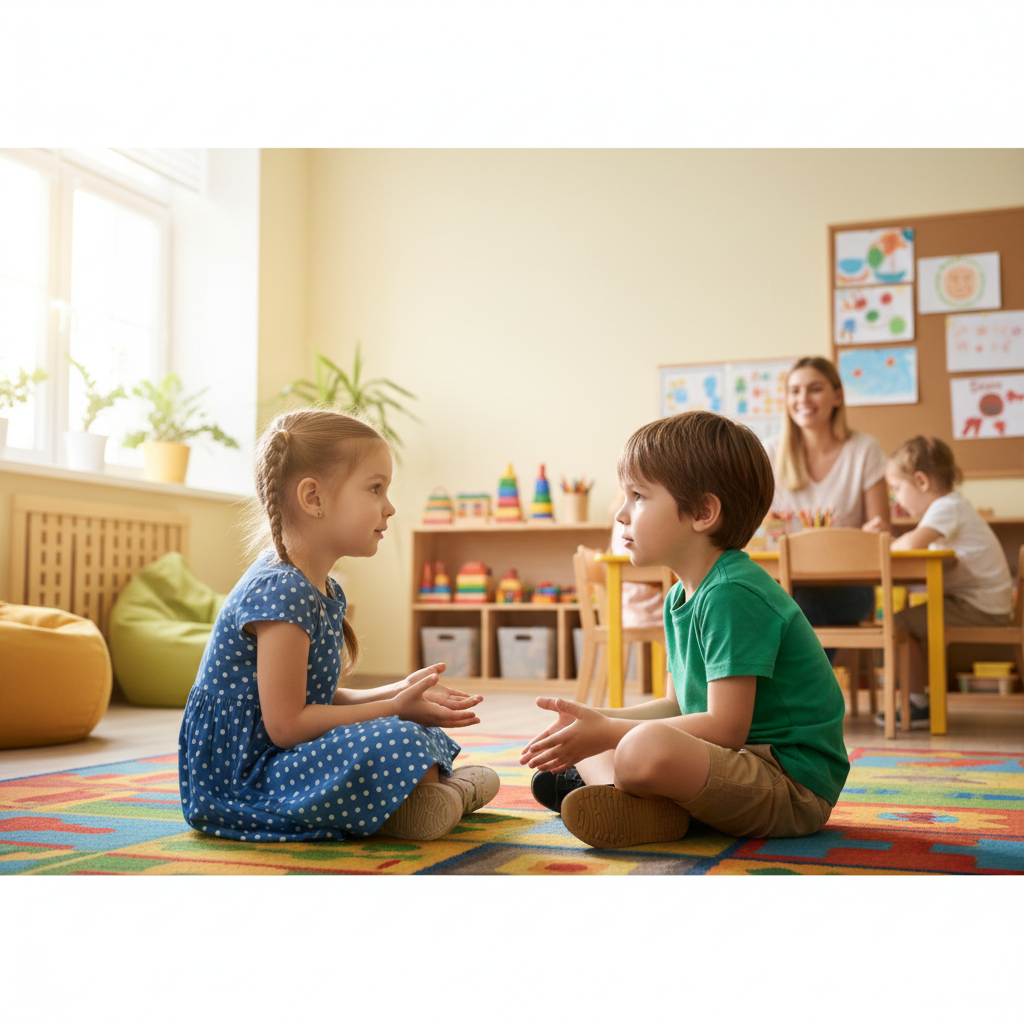
Communication: More Than Just Talk
Effective communication involves active listening, reading non-verbal cues, and understanding turn-taking.
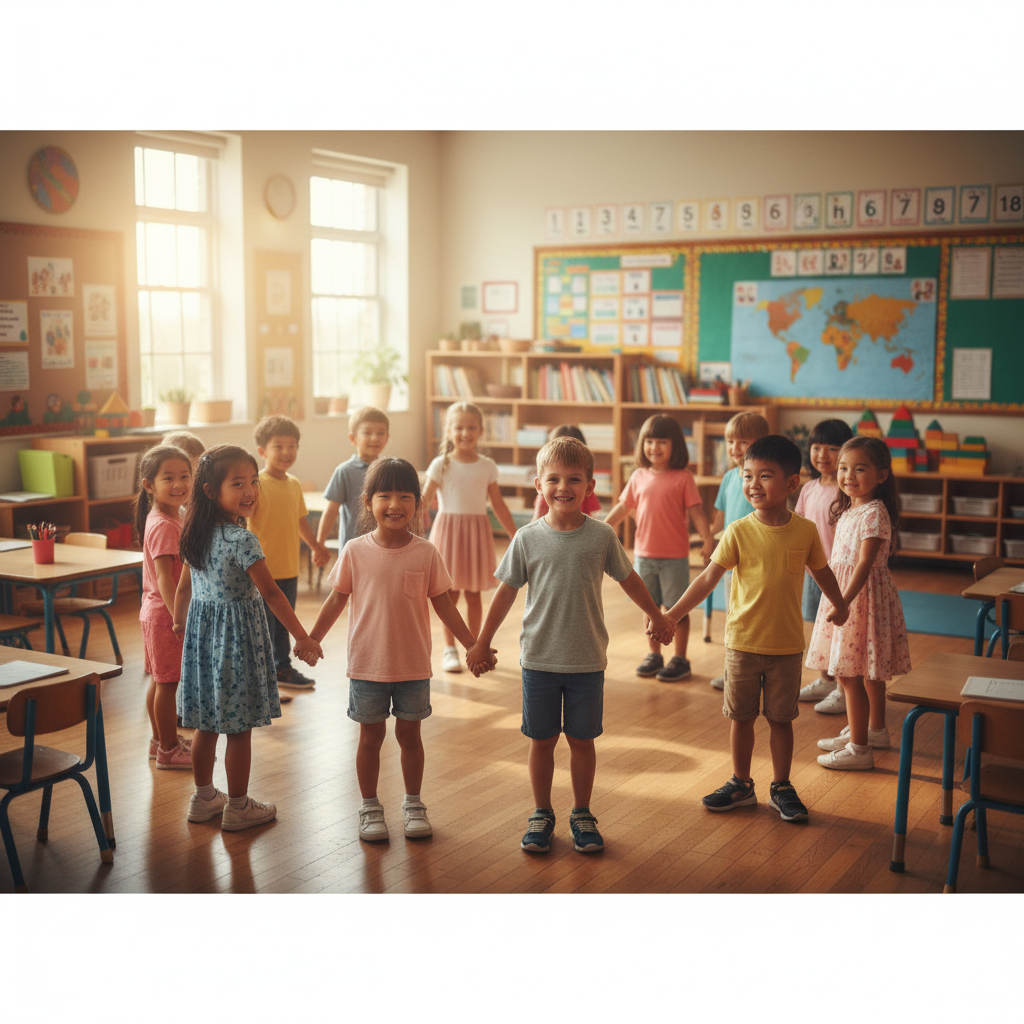
Classroom Strategy: The Talking Object
Use a soft ball or special item during circle time. Only the person holding it can speak, teaching patience and respect for the speaker.
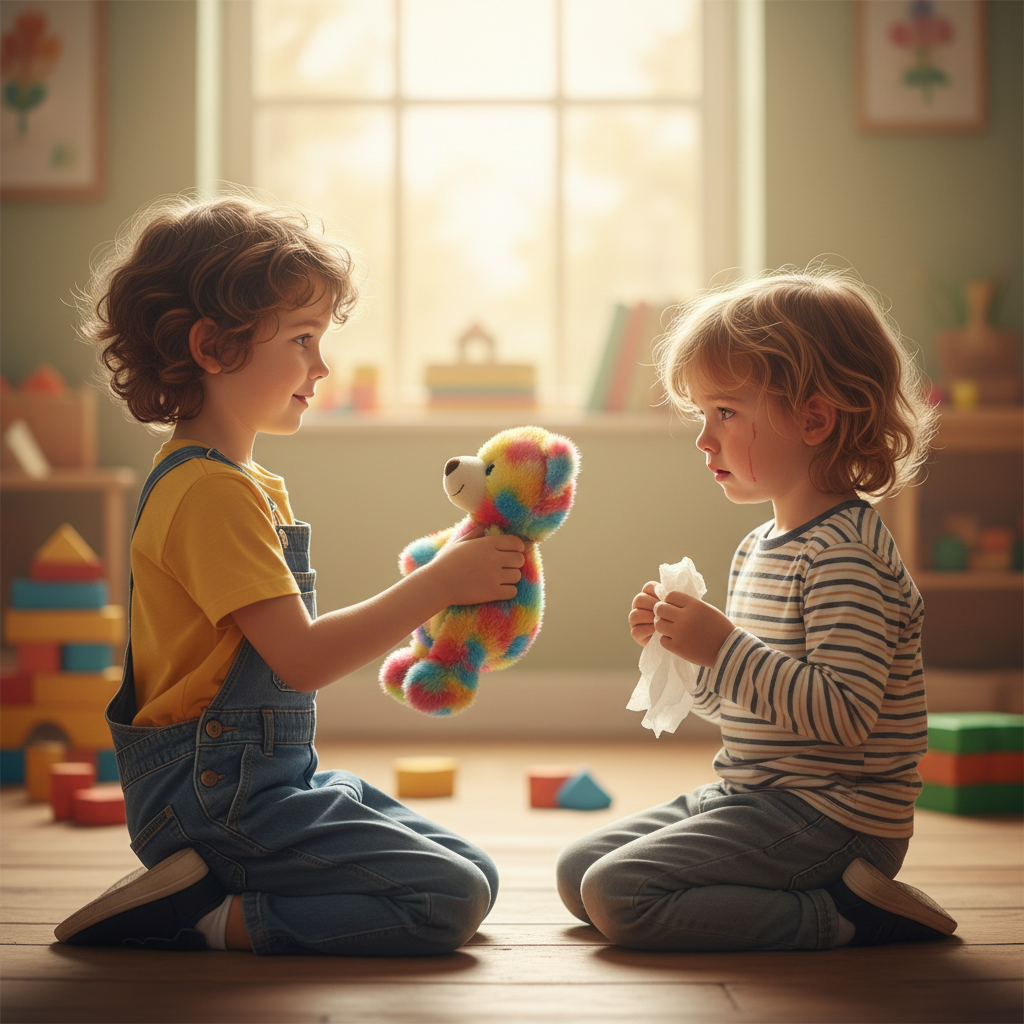
Empathy & Perspective Taking
Teaching children to identify feelings in others promotes inclusion and reduces bullying behavior.
Emotion Charades: Guess the feeling based on facial expressions.
Story Reflections: Pause reading to ask, 'How do you think that character feels right now?'
The Academic Connection
Students with strong social skills demonstrate higher academic achievement.
Data Source: CASEL Meta-Analysis of 213 school-based SEL programs.
Self-Regulation: Managing the 'Wiggles'
Self-regulation enables children to manage impulses, wait their turn, and focus on instructions.
Concept: The Stoplight System
RED: Stop and take a deep breath. YELLOW: Think about the problem. GREEN: Choose a positive solution.
Collaboration in the Classroom
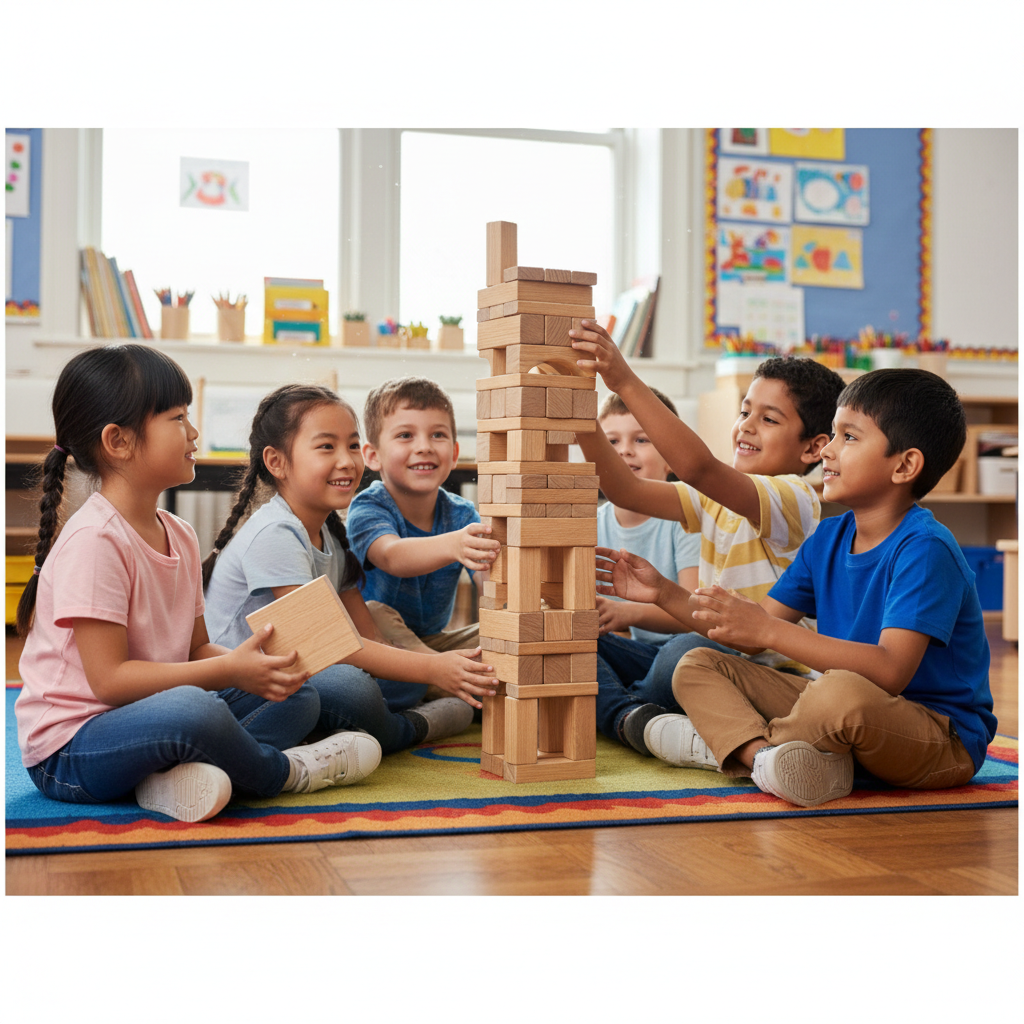
Group work teaches negotiation, role distribution, and shared responsibility.
Tip: Assign clear roles (Timekeeper, Recorder, Speaker) to ensure everyone participates.
The Teacher's Role: Modeling
Narration: Narrate your own social problem-solving out loud.
Scaffolding: Help students navigate conflict without solving it for them.
Praise: Specifically praise social choices ("I love how you waited for your turn!").
Measurable Outcomes: Conflict Reduction
Consistent focus on friendship skills typically leads to a sharp decline in playground and classroom disputes.
Teacher Toolkit Summary
Morning Meeting
Daily check-ins to build community and practice listening.
Calm Corners
Dedicated space/tools for self-regulation.
Active Modeling
Narrate conflict resolution in real-time.
Group Play
Structured collaborative activities with assigned roles.
Growing Happy Learners
By prioritizing social skills today, we are giving our students the most essential tools for their future.
- social-emotional-learning
- primary-education
- classroom-management
- teacher-resources
- sel-strategies
- student-wellbeing