






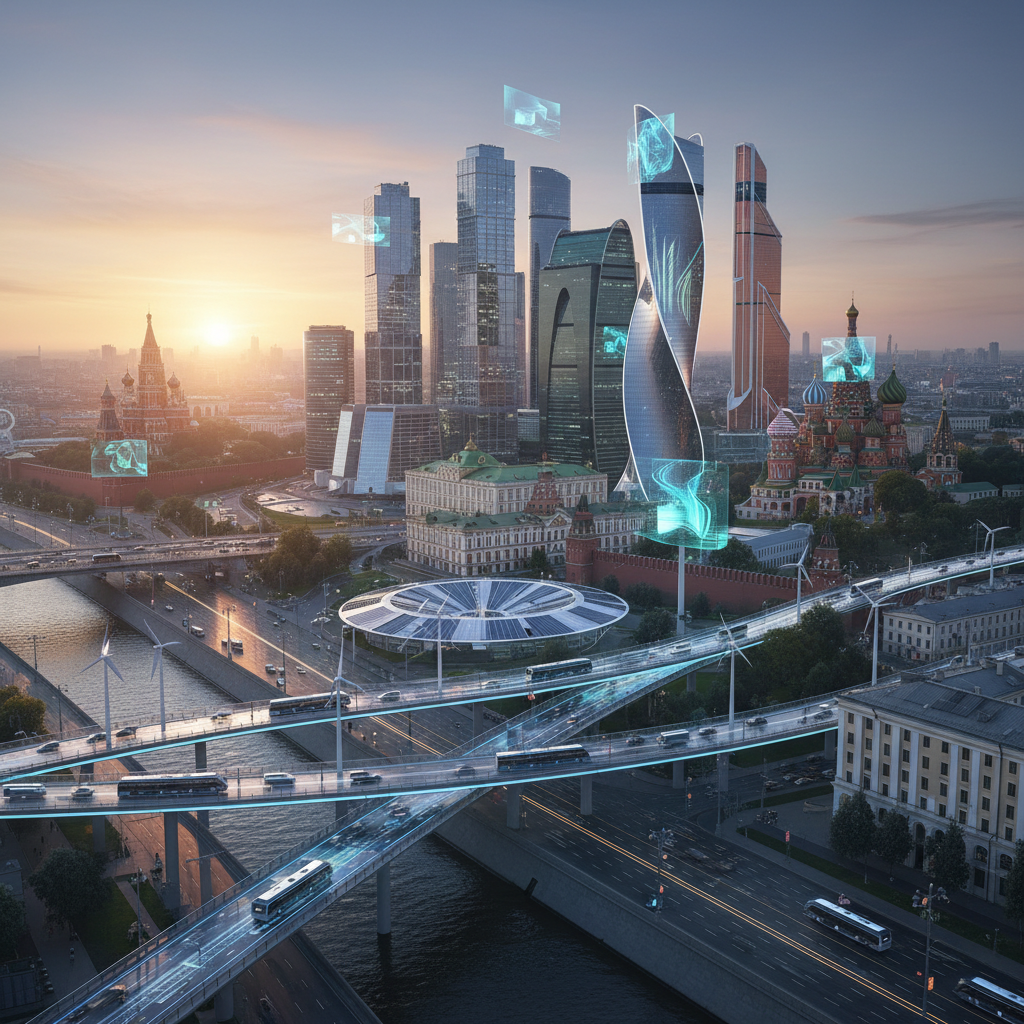
AI in Russia: National Strategy and 2030 Outlook
Explore Russia's National AI Strategy 2030, investment snapshots of Sberbank and Yandex, and technology integration in industry and agriculture.
AI in Russia: Strategy, Investment, and Future Outlook
An analysis of the National Strategy 2030, the 2025 Data Economy Project, and Key Market Players.
National Strategy for AI Development
Adopted in 2019, Russia's National AI Strategy aims for global leadership by 2030. The primary goal is to eliminate technological lag behind developed nations by boosting innovation entities by 50% and enhancing domestic software ecosystems. The strategy emphasizes export-oriented AI in manufacturing and agriculture.
Investment Landscape (Through 2024)
The initial roadmap allocated 244 billion rubles (~$3.4B) for AI development. Sberbank leads the private sector contribution, surpassing direct federal budget inputs, highlighting the commercial-state partnership model.
Key Market Players: The AI Alliance
Sberbank: The financial giant acts as the primary driver, investing 112 billion rubles and leading the federal roadmap.
Yandex: Provides the technological backbone, establishing huge open-source libraries and consumer AI applications.
Mail.ru Group (VK): Focuses on social data integration, digital assistants, and entertainment ecosystems.
Human Capital Development
Addressing the talent shortage is a critical pillar. Through the TOP-AI project and new university curricula, Russia aims for a nearly 10-fold increase in core AI specialists by 2030 compared to the 2018 baseline.
2025: Data Economy Project
Launched in 2025, the 'Data Economy and Digital Transformation' national project shifts focus to scaling regional prototypes. Key initiatives include the creation of an AI Development Center and widespread implementation of AI in economic monitoring and public infrastructure analysis.
Strategic Sectors Integration
Military & Security: Investment in autonomous systems, intelligence analysis, and aerial vehicle coordination amid geopolitical tensions.
Manufacturing: Implementing robotics and predictive maintenance to increase efficiency and reduce dependency on foreign tech.
Agriculture: Using AI for crop monitoring and autonomous harvesters to boost export potential.
Infrastructure & Hardware Challenges
Access to high-performance computing is a critical bottleneck for Russian AI. Official strategy prioritizes the development of domestic specialized processors and the creation of national supercomputing clusters to mitigate reliance on restricted foreign hardware.
Innopolis University's Research Center has generated 80 intellectual property results and projects worth 950 million rubles, serving as a prime example of regional AI success.
Ministry of Finance / TOP-AI Project Report (2025)
Regulation & Challenges
As of 2025, Russia lacks a comprehensive AI legal framework. A State Duma working group is currently developing standards expected by autumn 2025. The challenge lies in balancing rapid military and industrial innovation with safe, regulated public deployment amidst global sanctions.
International Cooperation
BRICS Alignment: Deepening technological partnerships with China and India to create alternative AI standards and data exchanges.
Sovereign AI: Promoting the concept of 'Sovereign AI' to protect national cultural codes and values in language models.
Export Potential: Targeting markets in the MENA region and Southeast Asia for Russian AI computer vision and cybersecurity solutions.
The 2030 Horizon
Aiming for Technological Sovereignty and Global Leadership
- ai-strategy
- digital-economy
- russian-tech
- sberbank
- national-projects
- technology-innovation