








Blockchain Voting: Building a Secure Digital Democracy
Explore how blockchain technology can create transparent, tamper-proof voting systems. Covers cryptography, smart contracts, and real-world case studies.
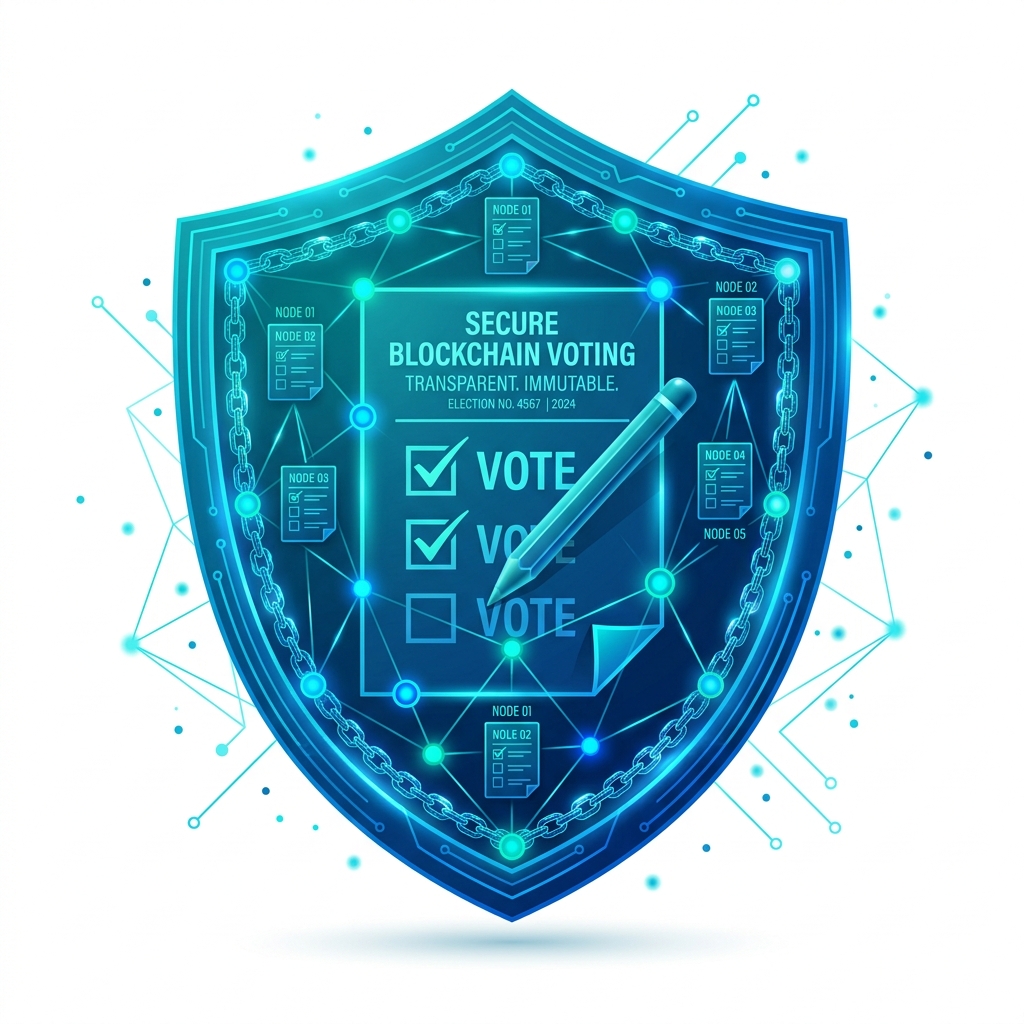
Blockchain-Based Voting System
A Transparent, Secure & Tamper-Proof Digital Democracy
Prepared for General Public & Students | April 2026
Blockchain Voting | 2026
Overview
What is Blockchain?
Key Properties of Blockchain
Traditional Voting Systems
Problems with Traditional Voting
Blockchain Voting System
How It Works
Core Components
Cryptographic Security
Smart Contracts in Voting
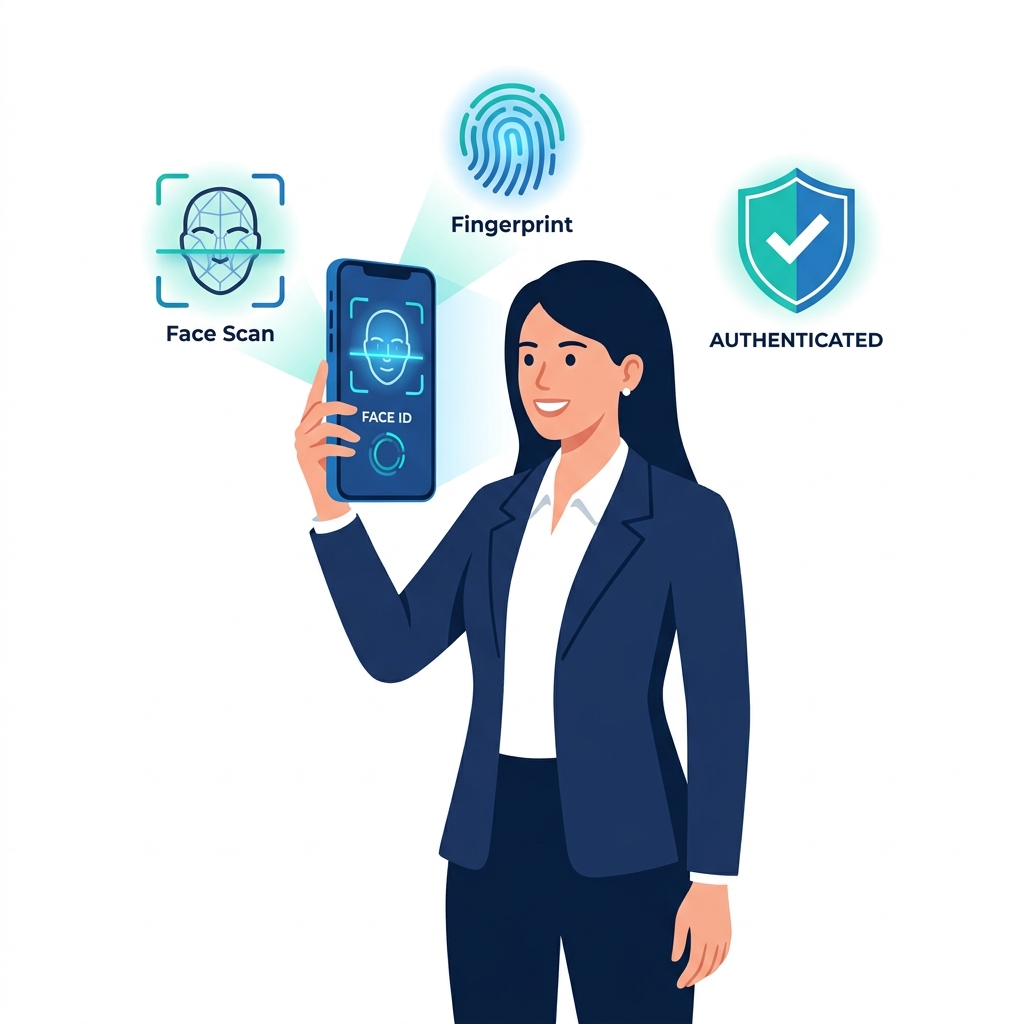
Voter Authentication
Transparency & Auditability
Real-World Case Studies
Challenges & Limitations
Legal & Regulatory Framework
Future of Blockchain Voting
Conclusion & Key Takeaways
What is Blockchain?
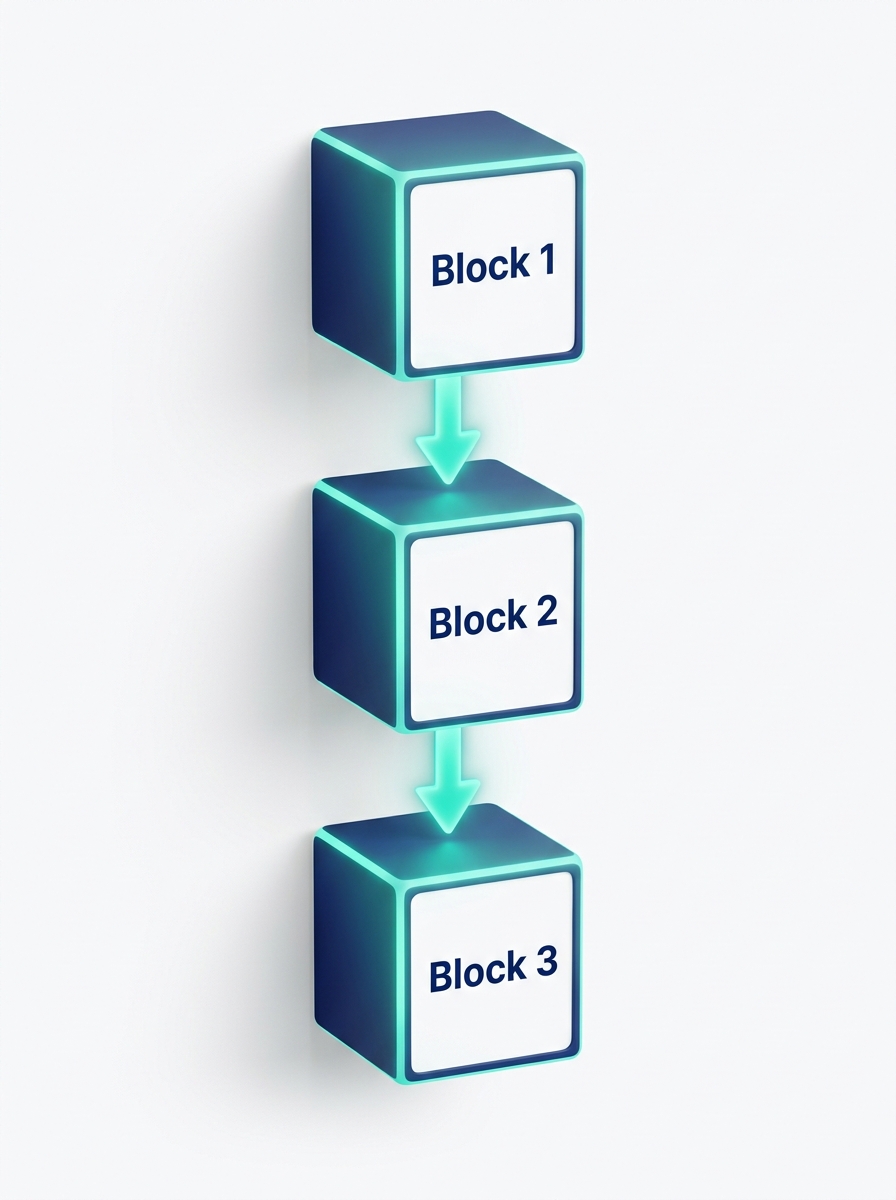
A blockchain is a distributed digital ledger that records transactions across a network of computers. Each record (block) is linked to the previous one, forming a chain — making data tamper-proof and transparent.
Decentralized
No single authority controls the data
Distributed
Copies exist across thousands of nodes
Immutable
Records cannot be altered once written
Blockchain Voting | 2026
Key Properties of Blockchain
Immutability
Once recorded, data cannot be changed or deleted
Decentralization
No central authority; power distributed across nodes
Transparency
All transactions are publicly verifiable
Security
Cryptographic hashing protects all records
Smart Contracts
Self-executing rules encoded in the chain
Consensus
Network agreement required for every transaction
Traditional Voting Systems
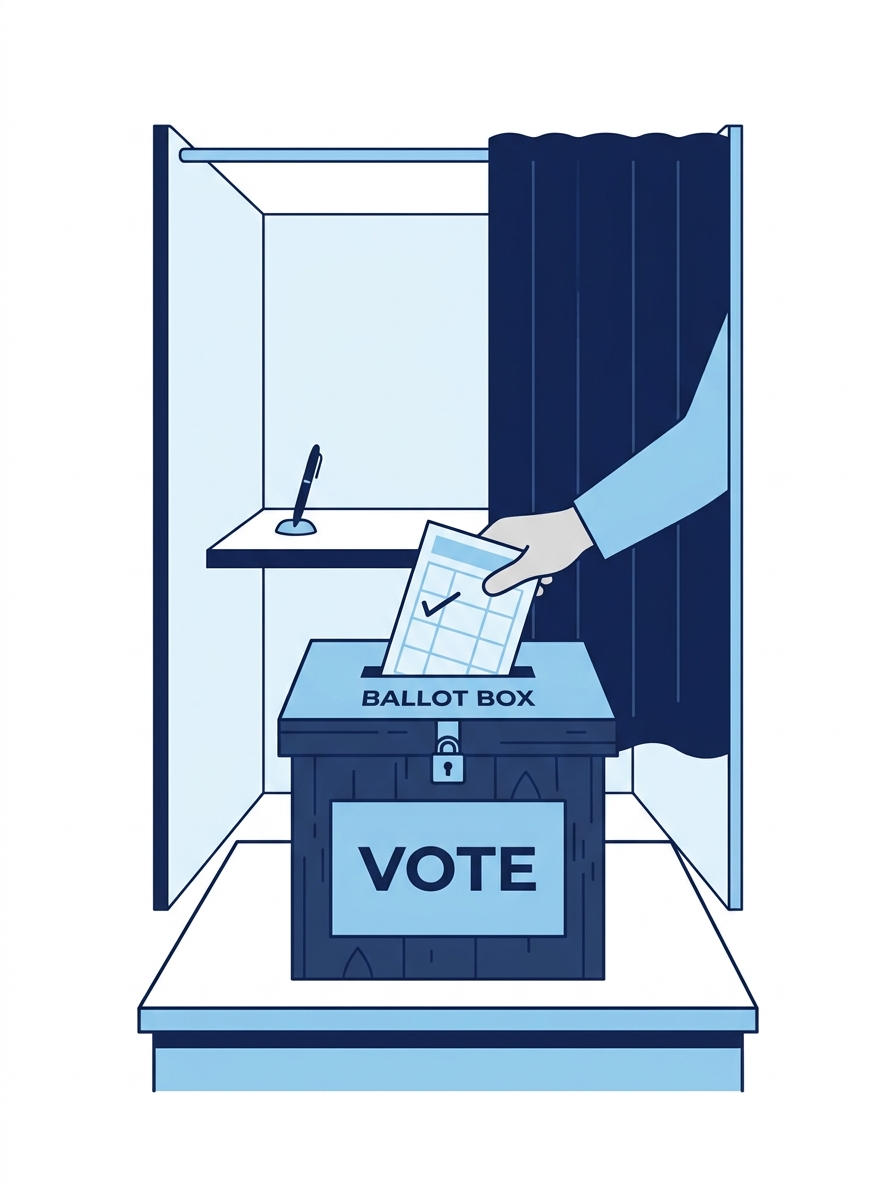
Traditional voting relies on paper ballots or electronic machines managed by centralized authorities.
📄
Paper Ballots
Manual counting, physical records
Used Worldwide
🖥️
Electronic Voting Machines (EVMs)
Digital but centralized
Used in India & US
📬
Postal / Absentee Voting
Remote but slow and insecure
Used in UK & US
🌐
Internet Voting (i-Voting)
Convenient but vulnerable
Used in Estonia
Problems with Traditional Voting
Voter Fraud
Ballot stuffing, impersonation, and manipulation
Security Vulnerabilities
Centralized systems are easy targets for hackers
Lack of Transparency
Voters cannot independently verify results
Slow Counting
Manual counting delays results by hours or days
High Costs
Printing, logistics, and manpower are expensive
Accessibility
Remote voters, disabled persons often excluded
In 2020, over 40% of Americans doubted election integrity — The need for a better system is clear.
What is a Blockchain Voting System?
A blockchain-based voting system uses distributed ledger technology to record votes as immutable transactions — ensuring every vote is secure, verifiable, and tamper-proof.
Votes stored as encrypted blockchain transactions
No central authority controls the process
Results are real-time, transparent, and auditable
Centralized, Opaque, Slow
Decentralized, Transparent, Instant
How It Works
Step-by-Step Blockchain Voting Process
01
Voter Registration
Identity verified on blockchain.
02
Authentication
Secure cryptographic key login.
03
Cast Vote
Vote encrypted and submitted.
04
Block Creation
Vote bundled into a new block.
05
Consensus
Network nodes validate the block.
06
Tally and Results
Votes auto-tallied, publicly verifiable.
Blockchain Voting | 2026
Core Components
🔗
Distributed Ledger
The backbone; stores all votes across nodes
🔐
Cryptographic Keys
Public/private keys ensure voter identity
📜
Smart Contracts
Automate voting rules and tallying logic
🌐
Peer-to-Peer Network
Decentralized nodes validate transactions
🖥️
Voter Interface
Web/mobile app for casting votes securely
Cryptographic Security
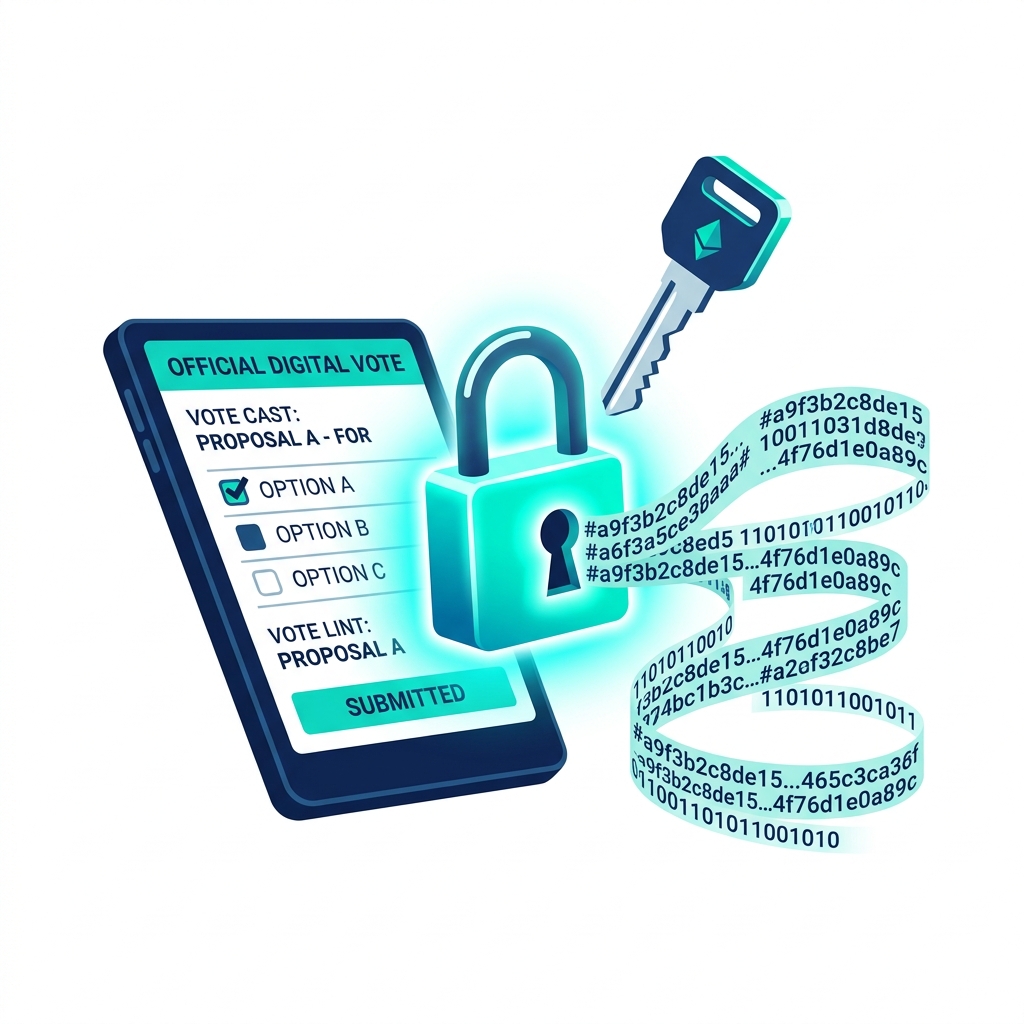
How cryptography secures votes using Public Key Infrastructure (PKI), hashing with SHA-256, and digital signatures.
Hashing
Every vote is converted to a unique hash — any change creates a completely different hash.
Digital Signatures
Voters sign their vote with a private key, verifiable with their public key.
Zero-Knowledge Proofs
Verify a vote was cast correctly without revealing the voter's choice.
Blockchain Voting | Cryptography
Smart Contracts in Voting
Smart contracts are self-executing programs stored on the blockchain. They automatically enforce voting rules without human intervention.
Automatically validate voter eligibility.
Prevent double voting.
Enforce voting deadlines.
Tally votes and publish results.
Enforce deadlines
Check eligibility
Prevent duplicate
Record vote
Blockchain Voting | Smart Contracts
Voter Identity & Authentication
Identity Verification
Government ID or biometric data is verified and securely linked to a digital wallet address.
Token Issuance
The verified voter receives a unique, one-time voting token on the blockchain network.
Anonymous Voting
The vote is cast using the token, keeping the individual's identity entirely separated from their vote.
Multi-Factor Auth
Biometrics
OTP
Digital ID Card
Blockchain Voting | Security
The Voting Process Flow
Complete End-to-End Secure Voting Journey
Voter Registration and ID Verification
Blockchain Token Issued
Election Opens (Smart Contract Triggered)
Voter Authenticates
Vote Cast and Encrypted
Transaction Broadcast to Network
Nodes Validate via Consensus
Block Added to Chain
Vote Tallied Automatically
Results Published Publicly
Blockchain Voting | 2026
Transparency & Auditability
Public Ledger
All votes recorded on a publicly viewable blockchain.
Real-Time Verification
Anyone can verify their vote was counted correctly.
Open Source Code
Voting smart contracts are publicly auditable.
Immutable Audit Trail
Complete history of every vote, timestamped forever.
"For the first time, every voter can personally verify their vote was counted — without trusting anyone."
Immutability & Tamper-Proof Records
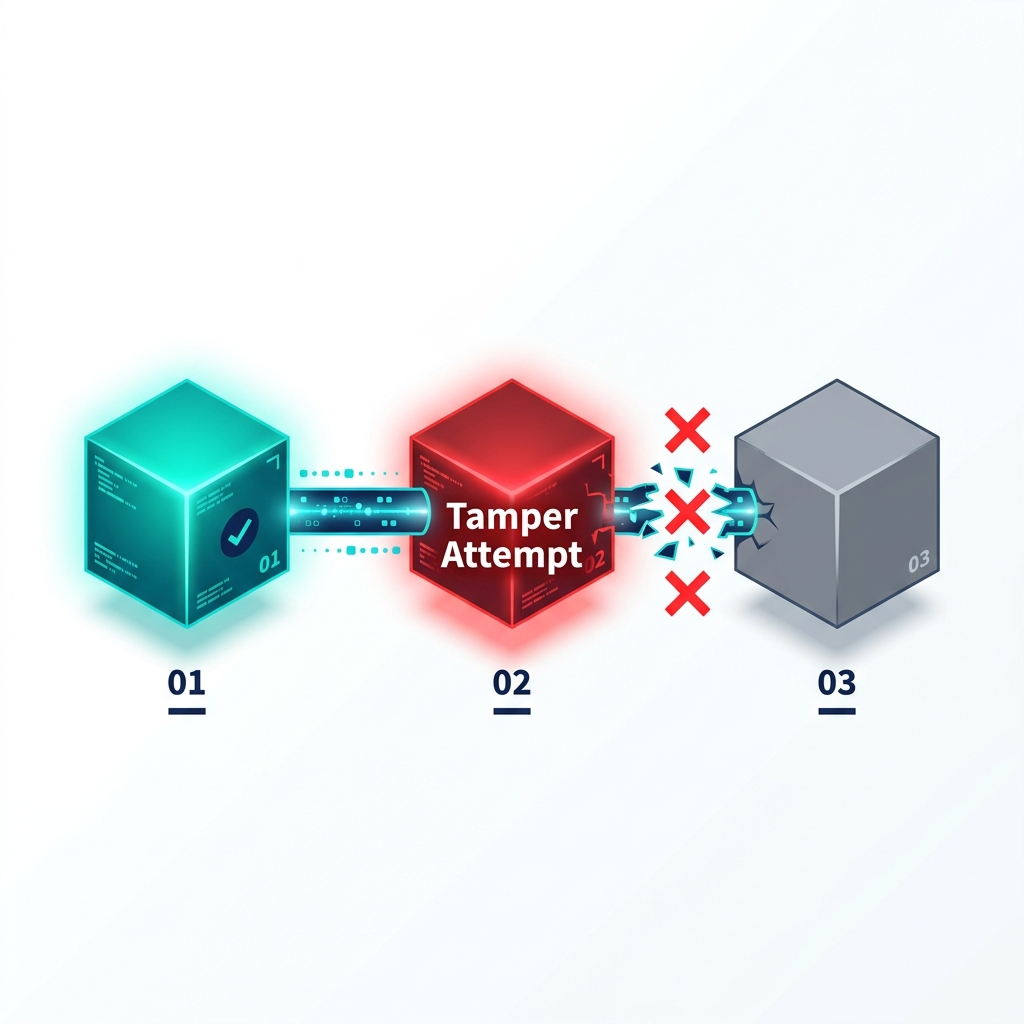
Once a vote is recorded on the blockchain, it cannot be altered, deleted, or tampered with. Any attempt to change a block would invalidate every block that follows, making fraud immediately detectable.
Each block contains a cryptographic hash of the previous block.
Changing any vote would break the entire chain.
Distributed copies across thousands of nodes prevent single points of failure.
Blockchain Voting | 2026
Decentralization Benefits
Decentralized Voting Network
01
No Single Point of Failure
System stays up even if some nodes go down.
02
No Central Authority
Eliminates risk of insider manipulation.
03
Global Accessibility
Anyone with internet can vote from anywhere.
04
Censorship Resistant
Impossible to shut down or block.
05
Cost Reduction
No need for physical infrastructure.
06
Community Trust
Distributed control builds public confidence.
Blockchain Voting | System Architecture
Real-World Examples
Blockchain voting has already been tested and used globally.
Sierra Leone (2018)
First blockchain-verified election results.
West Virginia, USA (2018)
First blockchain mobile voting for military.
Estonia
National i-Voting system since 2005, blockchain integration.
Moscow, Russia (2019)
Blockchain used for local government voting.
Switzerland
Ongoing blockchain e-voting pilots.
Case Study: Sierra Leone
World's First Blockchain-Verified Election — 2018
Date
March 2018 Presidential Election.
Organization
Agora (Swiss blockchain company) independently recorded votes on the blockchain.
What Happened
Agora deployed blockchain parallel vote recording alongside official counting.
Result
Results were published on the blockchain within hours — transparent and verifiable.
Significance
First time blockchain was used to record a national election result.
“This was a landmark moment showing blockchain could work in real elections.”
Case Study: West Virginia, USA
First Blockchain Mobile Voting for Military — 2018
Date
2018 US Midterm Elections.
Platform
Voatz mobile app (blockchain-based).
Who
Overseas military personnel and voters abroad.
How
Voters authenticated via biometrics on smartphone, votes recorded on private blockchain.
Result
144 voters used the system successfully — proof of concept validated.
Later Review
MIT audit (2020) found security concerns — led to debate on security standards.
Pioneering but highlighted need for rigorous security audits.
Case Study: Estonia
The World's Most Advanced Digital Democracy
Since 2005
Estonia has offered i-Voting (internet voting) — first country in the world.
2023 Elections
Over 51% of votes cast online.
Technology
KSI Blockchain (Keyless Signature Infrastructure) used to secure the digital state.
Digital Identity
All citizens have a blockchain-backed digital ID card.
Why it works
Strong digital infrastructure, public trust, national digital identity system.
Over 12 million i-Votes cast since 2005 — zero proven fraud.
Challenges & Limitations
Digital Divide
Not all voters have internet access or smartphones
⚠️
Key Management
Losing private keys means losing your vote permanently
🔐
Technical Complexity
Difficult for average voters to understand and trust
🖥️
Scalability
Blockchain networks can be slow with millions of simultaneous voters
⚡
Regulatory Hurdles
Most electoral laws not written for blockchain systems
🏛️
Coercion Risk
Vote-buying easier if voters can prove how they voted remotely
🔍
Scalability Issues
Traditional blockchains like Ethereum can process only 15–30 transactions per second. A national election may require millions of votes within a few hours — creating a significant bottleneck.
Layer 2 Solutions
Off-chain processing with on-chain settlement.
Sharding
Splitting the blockchain into parallel chains.
Permissioned Blockchain
Private chains with fewer nodes but higher throughput (e.g., Hyperledger).
Legal & Regulatory Framework
Current Legal Landscape
Most countries' electoral laws require paper audit trails.
Blockchain votes may not be legally recognized without new legislation.
Data privacy laws (e.g., GDPR) conflict with permanent public ledgers.
Digital identity verification standards vary widely by jurisdiction.
What's Needed
Legal recognition of blockchain records as equivalently valid votes.
Standardized international protocols for blockchain-based elections.
Independent code security audits from accredited certification bodies.
Robust voter anonymity and privacy protections built into regulations.
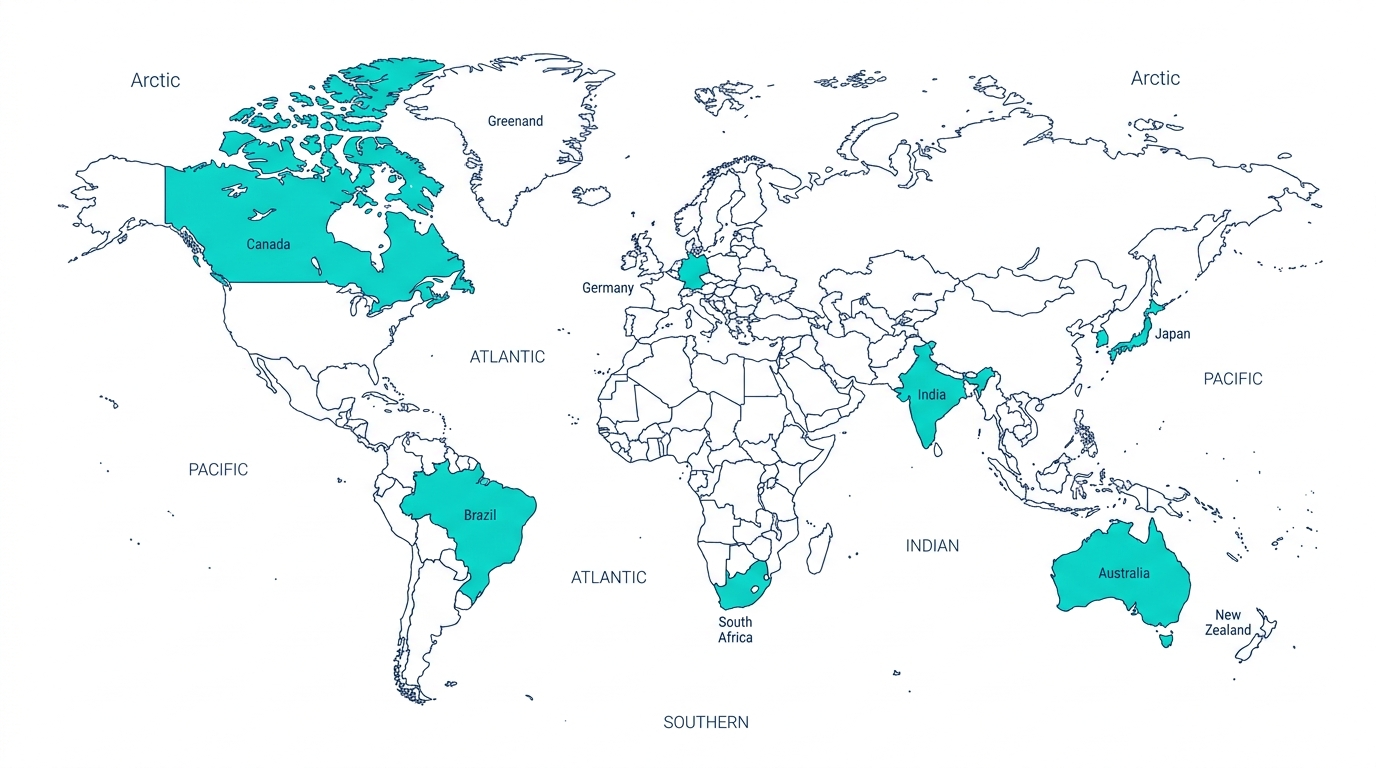
Countries with Draft Blockchain Election Laws
The Future of Blockchain Voting
AI + Blockchain
Smart anomaly detection for fraud.
Quantum-Resistant Cryptography
Future-proof security.
Self-Sovereign Identity (SSI)
Voters control their own digital identity.
2026
Wider pilot programs in developing nations.
2027
AI-assisted voter identity verification.
2028
First fully blockchain-verified national election in a major democracy.
2030
International blockchain voting standards established.
2035
Mainstream global adoption of blockchain voting.
Blockchain Voting | Future Landscape
Conclusion & Key Takeaways
Blockchain brings transparency and immutability to elections.
Cryptographic security eliminates fraud and manipulation.
Decentralization removes the need to trust any single authority.
Real-world pilots prove feasibility — but challenges remain.
Scalability, legal, and accessibility barriers must be solved.
The future of democracy may be digital, transparent, and blockchain-secured.
The question is not IF blockchain will transform elections — but WHEN and HOW.
Blockchain-Based Voting System | 2026
- blockchain
- voting-systems
- digital-democracy
- cryptography
- smart-contracts
- fintech
- cybersecurity