
Decoding QR Codes: How They Work and Why They Matter
Decoding the Matrix
How QR Code Technology Works
Digital Literacy Series | University Coursework

The 2-Second Connection
Have you ever scanned a cafe menu and wondered: How does a simple pattern of black and white squares instantly connect the physical world to the digital web?
Learning Objectives
- 01. Understand the history and structure of Quick Response (QR) codes.
- 02. Analyze the technical 'scan-decode-execute' process.
- 03. Evaluate specific security risks like 'Quishing' (QR Phishing).
What is a QR Code?
Invented in 1994 by Denso Wave (Japan). Unlike standard linear barcodes that read left-to-right (1D), QR Codes are 2-Dimensional matrices. They store data density both horizontally and vertically, allowing them to hold over 7,000 numeric characters.

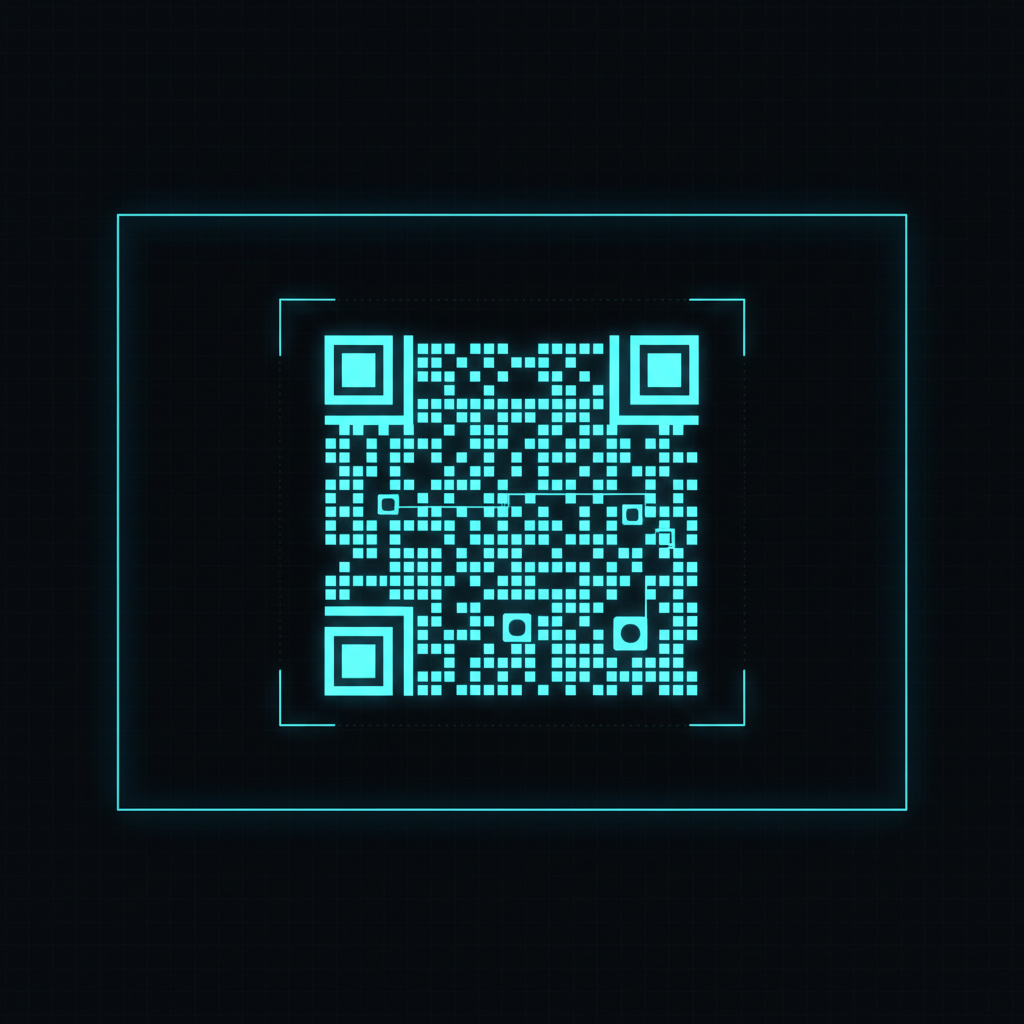
The Rise of Scans
QR code usage surged post-2020. Millions of users now rely on them for payments, menus, and information retrieval daily. This creates a need for better literacy on how the background tech actually works.
Step 1 & 2: Scanning & Decoding
OPTICAL CAPTURE: The camera identifies the three 'Finder Patterns' (corners) to determine position and orientation.
BINARIZATION: The image is converted to grayscale, then to pure black and white (binary).
ERROR CORRECTION: Reed-Solomon algorithms reconstruct data even if up to 30% of the code is damaged/obscured.
Step 3: Execution

Benefits vs. Limitations
Benefits
PROS: High data capacity (vs 1D barcodes), error resistance (readable even if ripped), fast 360-degree scanning, no battery required.
Limitations
CONS: Requires optical line-of-sight, effectiveness drops with distance, potential vector for malware delivery (security risk).

Interactive Activity
Scan the imaginary code below. How might this technology be used in your specific field of study to improve accessibility?
Stay Curious. Stay Secure.
True digital literacy isn't just using the tools—it's understanding how they work.
Decoding the Matrix
How QR Code Technology Works
Digital Literacy Series | University Coursework