
Java Vending Machine Mini Project
Smt. Kamala & Sri Venkappa M. Agadi College of Engineering and Technology, Lakshmeshwar Department of Information Science & Engineering
Java Mini Project: Smart Vending Machine
Course: BCS306A - Object Oriented Programming with Java
Presented by: [Student Name] | USN: [Your USN] Semester: 3rd | Section: [A/B]
Guide: Mrs. Prathima Mahapurush (Course Coordinator)
Introduction
The Vending Machine System is a simulation of an automated machine that dispenses items such as snacks and beverages to users after money is inserted and a selection is made.
Purpose of the Project:
To demonstrate core Object-Oriented Programming (OOP) concepts in Java, including encapsulation, state management, and exception handling, by modeling a real-world self-service kiosk.

Problem Statement
- •Manual retail counters require constant human presence, leading to high labor costs.
- •Human handling of small cash transactions is prone to calculation errors.
- •Traditional shops have limited operating hours, whereas users need 24/7 access to basic supplies.
- ➜This project solves these issues by automating the inquiry, payment, and dispensing process.
Objectives

Scope of the Project
- Inventory maintenance (add/remove items).
- Transaction processing (calculating total price vs. inserted cash).
- Change calculation logic.
- User Interface (Console based simulation).
Limitations:
- No physical hardware integration.
- Does not handle credit card processing APIs (simulation only).
Technologies Used
System Architecture
1. Start: System initializes inventory.
2. Input: User inputs money and selects code.
3. Process: Validation Logic runs (Is code valid? Is balance > price?).
4. Action: Dispense Product & Return Balance OR Display Error.
5. Termination: Transaction completes; return to idle.

Implementation (Core Logic)
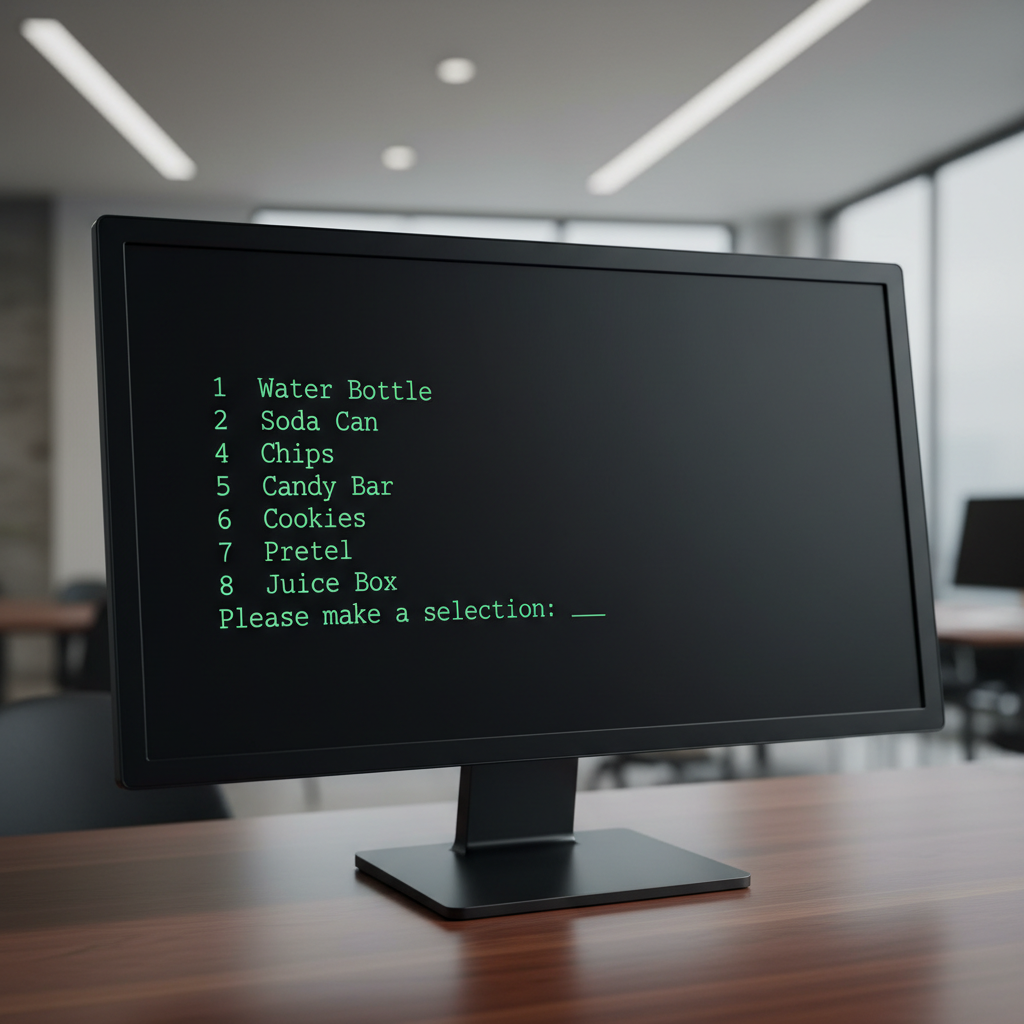
Output Screens
Step 1: Menu Display.
Step 2: Money Insertion Confirmation.
Step 3: Successful Transaction message with change calculation.
Results & Analysis
Achievements:
- 100% calculation accuracy for change dispensing.
- Robust handling of 'Out of Stock' events.
- Reduced transaction time compared to manual processing.
Conclusion
"The Java Mini Project successfully implements a Vending Machine simulation. It validates the use of Object Oriented Programming to solve real-world automation problems, providing a scalable foundation that could later be connected to a physical database or hardware interface."
References
Thank You
Questions?
Smt. Kamala & Sri Venkappa M. Agadi College of Engineering and Technology, Lakshmeshwar Department of Information Science & Engineering
Java Mini Project: Smart Vending Machine
Course: BCS306A - Object Oriented Programming with Java
Presented by: [Student Name] | USN: [Your USN] Semester: 3rd | Section: [A/B]
Guide: Mrs. Prathima Mahapurush (Course Coordinator)