
Smart Navigation Solutions for Autonomous Mobile Robots
Navigation & Guidance of Autonomous Mobile Robots
Advanced Mobility Solutions for Dynamic Industry Environments
Project Proposal 2025 | Robotics Division
The Shift to Autonomy
Traditional Automated Guided Vehicles (AGVs) rely on fixed infrastructure like magnetic tape or wires. Autonomous Mobile Robots (AMRs) represent the next leap, utilizing onboard sensors and processors to navigate independently without external physical guides. This capability allows for rapid deployment and flexibility in changing facility layouts.

Current Navigation Challenges
- ➤ Dynamic Environments: Handling moving obstacles like forklifts and pedestrians in real-time.
- ➤ Localization Drift: Maintaining accurate positioning over long durations without GPS (indoor denial).
- ➤ Computational Load: Balancing complex SLAM algorithms with limited onboard power resources.
- ➤ Connectivity: Ensuring low-latency data transmission in areas with signal interference.
Projected Market Growth
The demand for AMRs is surged by labor shortages and the need for flexible automation. Industry reports project the market to exceed $10 Billion by 2028.
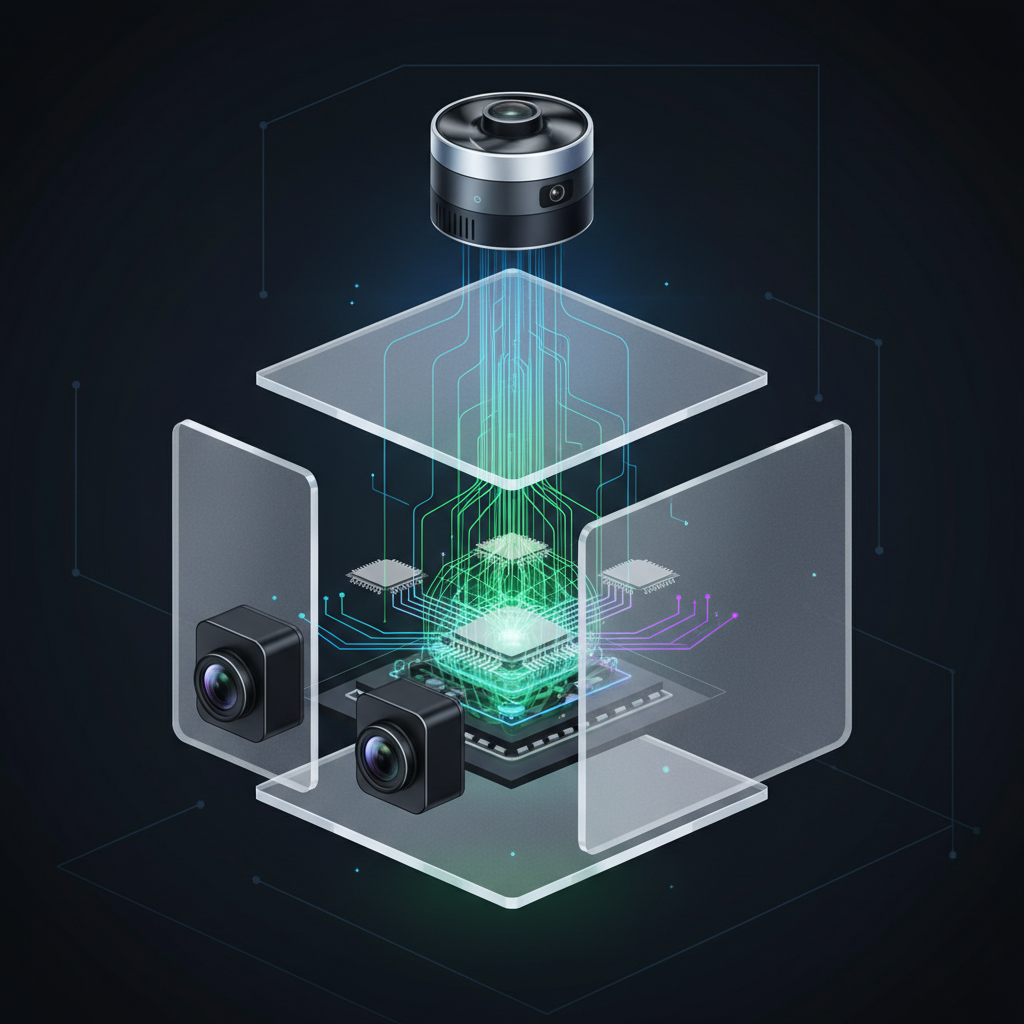
Proposed Sensor Architecture
Our implementation utilizes a multi-modal fusion approach. LiDAR provides precise 2D/3D spacial mapping, Stereo Vision offers depth perception and object recognition, and Inertial Measurement Units (IMU) ensure stability during rapid acceleration or uneven terrain traversal.
Path Planning Algorithms
Global Planning: Uses A* (A-Star) or Dijkstra algorithms to compute the optimal route across the static map.
Local Planning: Implements Dynamic Window Approach (DWA) or TEB (Timed Elastic Band) to avoid immediate obstacles.
SLAM Integration: Simultaneous Localization and Mapping updates the occupancy grid in real-time.
Efficiency: Manual vs AMR
Integrating AMRs into warehouse workflows drastically improves throughput. By handling material transport, human workers can focus on high-value picking tasks, increasing units processed per hour.
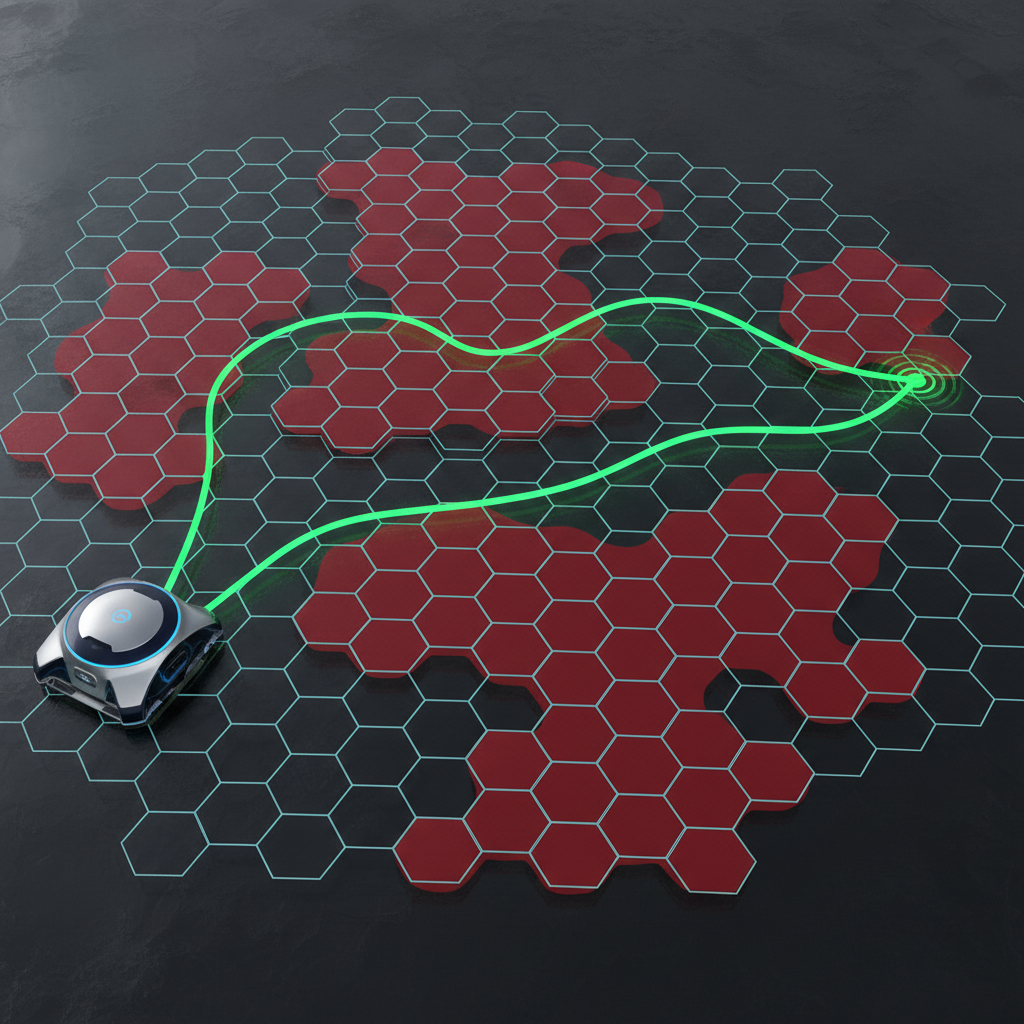
Safety Protocols & Dynamic Avoidance
Implementation Roadmap
01
Phase 1: Environment Mapping & Network Setup (Weeks 1-4)
02
Phase 2: Pilot Deployment (Single Bot) & Calibration (Weeks 5-8)
03
Phase 3: Fleet Integration & Traffic Manager Setup (Weeks 9-12)
The factories of the future will not be static environments, but fluid ecosystems where intelligent machines adapt to the workflow, not the other way around.
— Vision Statement
Navigation & Guidance of Autonomous Mobile Robots
Advanced Mobility Solutions for Dynamic Industry Environments
Project Proposal 2025 | Robotics Division